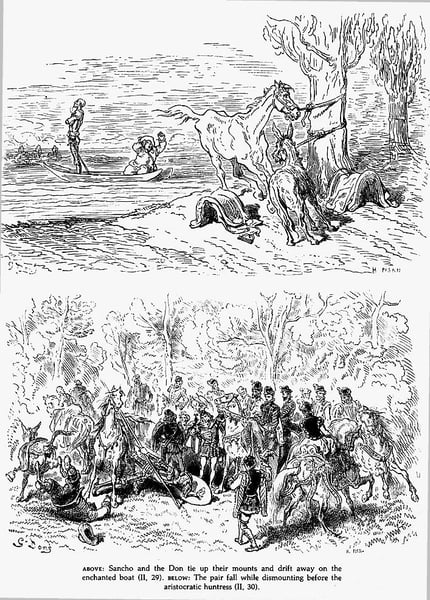
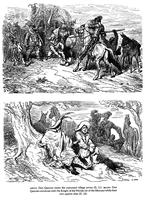
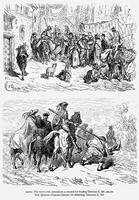
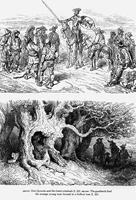
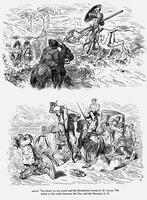
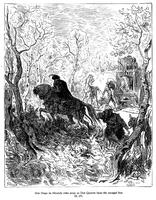
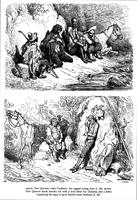
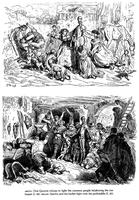
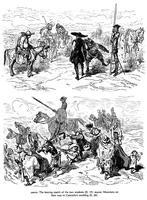
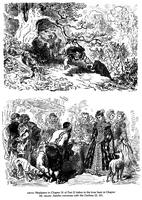
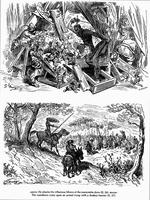
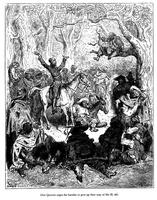
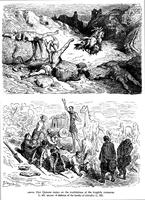
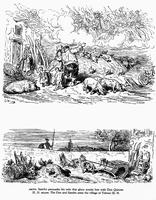
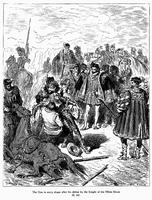
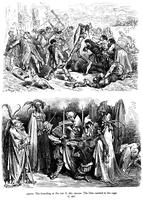
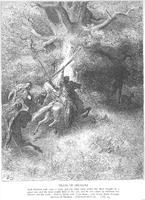
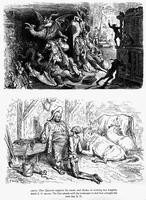
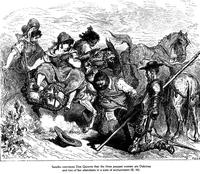
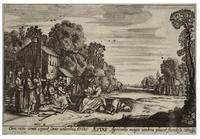
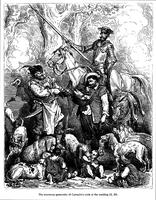
Gustave Doré’s Don Quixote stands as a landmark of Romantic illustration, merging the movement’s fascination with imagination, emotion, and the sublime with the narrative demands of literary art. Executed in the Romantic style, the work transcends mere accompaniment to Cervantes’ text by imbuing the knight-errant’s adventures with a profound dramatic tension—often through stark chiaroscuro, exaggerated gestures, and a palpable sense of heroic folly. Doré’s skill in rendering both the lofty ideals and the gritty, melancholy reality of Quixote’s world highlights the Romantic preoccupation with the conflict between individual vision and mundane existence. The illustration’s significance lies in how it visually defines the character for generations, transforming Don Quixote into an iconic symbol of Romantic idealism. By harnessing the illustrative genre as a vehicle for high artistic expression, Doré elevates the printed page into a realm of theatrical intensity, ensuring that his interpretation remains inseparable from the enduring legacy of the novel itself.