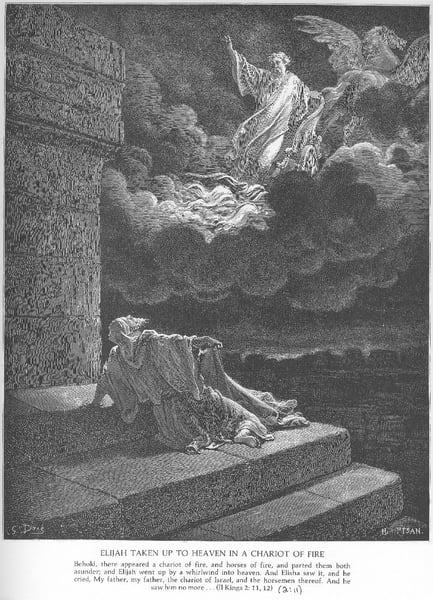
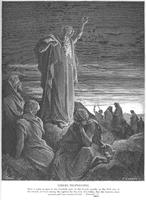
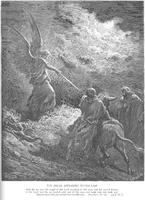
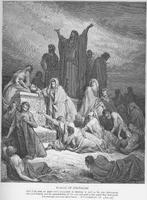
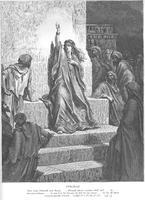
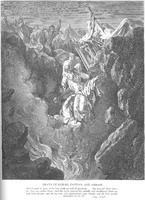
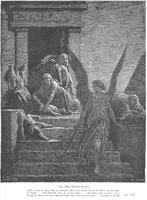
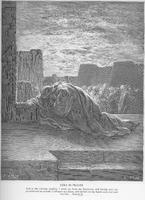
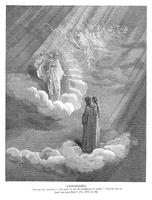
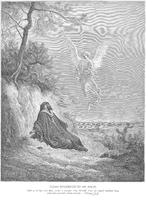
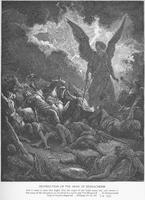
Gustave Doré’s Elijah Ascends to Heaven in a Chariot of Fire is a quintessential example of Romantic religious painting, where the artist transforms a biblical narrative into a spectacle of divine terror and transcendent glory. The work’s significance lies in Doré’s masterful fusion of Baroque drama with Romantic sublimity—the fiery chariot and swirling horses erupt from the canvas with explosive energy, while the receding figure of Elijah becomes a vanishing point of spiritual ascent. Doré’s use of stark chiaroscuro (likely heightened in the original engraving or painting) creates a vortex of light and shadow that pulls the viewer into the miraculous event, emphasizing the overwhelming power of God over mortal perception. As a Romantic work, it prioritizes emotional intensity and the awe of the unknowable over any moralizing narrative, capturing the moment of rapture as both terrifying and ecstatic. Historically, Doré’s treatment of this subject—part of his celebrated illustrated Bible—helped popularize biblical stories for a 19th-century audience seeking dramatic, emotionally charged visualizations, cementing his legacy as a master of the sublime in religious art.