
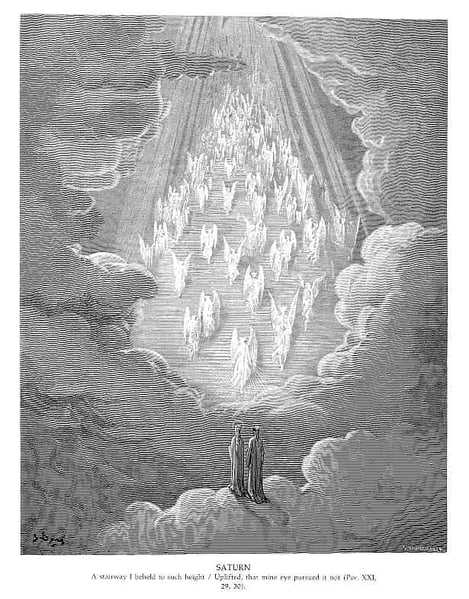
Expert analysis of Gustave Dore’s Saturn
Style: Romanticism · Genre: illustration
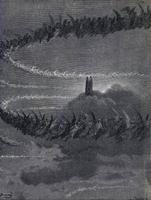
Gustave Doré’s Saturn is a powerful exemplar of Romantic illustration, demonstrating how the genre transcended mere decoration to become a vehicle for sublime terror and psychological depth. Doré, renowned for his book illustrations—especially for Dante’s Divine Comedy, Milton’s Paradise Lost, and the Bible—here seizes upon the mythological figure of Saturn (the Roman god of agriculture, time, and devouring) to explore themes of mortality, power, and the grotesque.
Significance within Romanticism:
Romantic artists prized intense emotion, the exotic, the macabre, and the sublime—an awe mixed with fear. Doré’s Saturn embodies this through its dramatic chiaroscuro (deep shadows slicing across a lit figure), the tortured anatomy of the god, and the haunting, allegorical narrative. Saturn, often depicted devouring his children in a myth of cyclical time, is rendered not as a classical ideal but as a monstrous, almost Gothic figure. This aligns with Romanticism’s fascination with the dark, irrational side of human experience, and with the “demonic” in art.
Doré’s Technical and Expressive Mastery:
As an illustrator, Doré could not rely on color; instead, he used tightly controlled line and cross-hatching to create texture, volume, and atmosphere. In Saturn, the deep blacks of the engraving give the scene a nightmarish weight, while the god’s emaciated, straining body suggests both physical and psychological torment. The composition is claustrophobic, focusing all attention on the figure’s agonized expression and the implied violence. This technique made Doré’s illustrations essential to the literary works they accompanied, often surpassing the text in emotional impact.
Genre and Period Context:
During the 19th century, illustration was often considered a minor art, but Doré elevated it to a level of high dramatic art. His illustrations for the Divine Comedy (published 1861–1868) and later works like the Bible (1866) set a new standard for narrative imagery. Saturn belongs to this tradition of illustrating literary or mythological subjects with a Romantic sensibility—emphasizing the supernatural, the terrible, and the sublime. The work’s significance lies in how it synthesizes Doré’s technical virtuosity with the Romantic obsession with time, destruction, and the artist’s inner vision, making the viewer feel the weight of an ancient myth as a present, visceral horror.
Visually similar
20 works with related composition and palette
Paradiso Canto 1
Gustave Dore
The Heaven of the Fixed Stars II
Gustave Dore
Cacciaguida
Gustave Dore
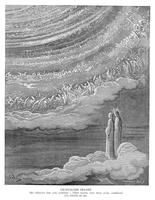
Crystalline Heaven
Gustave Dore
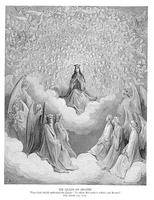
The Queen of Heaven
Gustave Dore
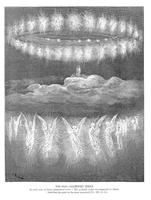
The Sun--Glorifies Souls
Gustave Dore
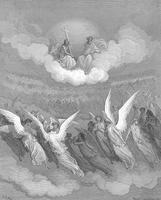
Heaven rung, With jubilee, and loud hosannas filled The eternal regions
Gustave Dore
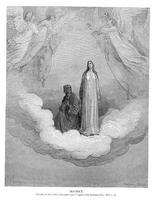
Beatrice II
Gustave Dore
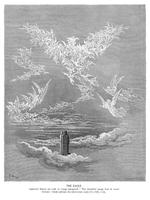
The Eagle II
Gustave Dore
Paradiso Canto 14
Gustave Dore
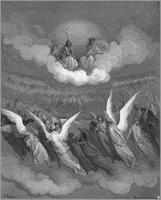
Paradise Lost
Gustave Dore
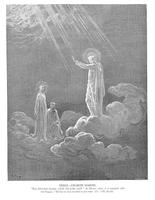
Venus - Charles Martel
Gustave Dore
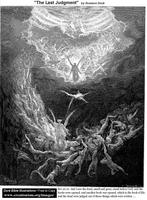
The Last Judgment
Gustave Dore
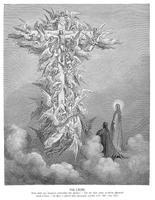
The Cross
Gustave Dore
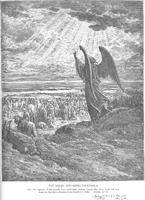
An Angel Appears to the Israelites
Gustave Dore
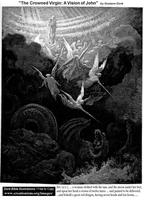
The Crowned Virgin Vision Of John
Gustave Dore
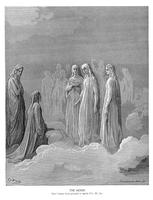
The Moon
Gustave Dore
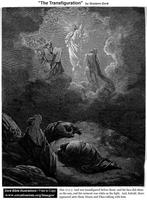
The Transfiguration
Gustave Dore
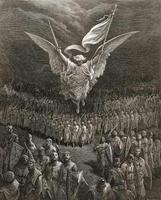
An angel leading the Crusaders to Jerusalem
Gustave Dore
Paradiso
Gustave Dore