
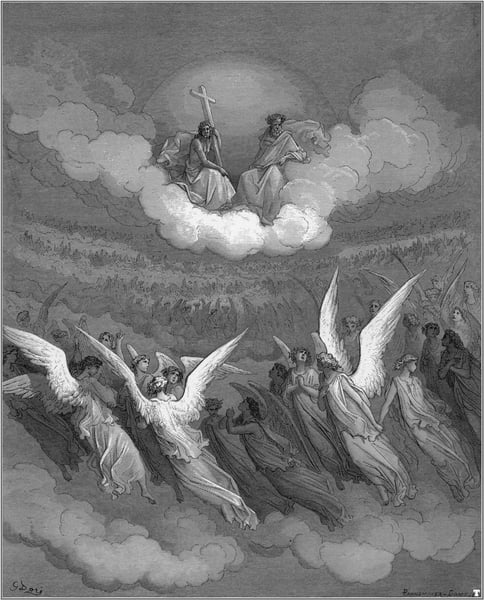
Expert analysis of Gustave Dore’s Paradise Lost
Style: Romanticism · Genre: illustration
Expert Analysis: "Paradise Lost" by Gustave Doré
Gustave Doré’s illustrations for John Milton’s Paradise Lost stand as a monumental achievement in Romantic book illustration, demonstrating the artist’s unparalleled ability to translate epic poetry into visual drama. Working within the Romantic style, Doré emphasized emotional intensity, sublime nature, and the tension between light and darkness—themes that resonate directly with Milton’s cosmic battle between good and evil.
Significance in Romanticism:
Doré’s treatment of Paradise Lost epitomizes the Romantic fascination with the sublime—awe-inspiring, overwhelming landscapes that dwarf human figures and evoke both terror and beauty. His engravings of Hell, Heaven, and the Garden of Eden are not merely decorative but function as emotional extensions of the text. The vast, cavernous spaces of Pandæmonium, rendered in deep chiaroscuro, convey the grandeur and tragedy of Satan’s rebellion, while the luminous, ordered heavens underscore divine majesty. This contrast between chaos and order was a hallmark of Romantic visual rhetoric.
Technical mastery:
Doré’s skill in wood engraving allowed him to achieve astonishing tonal range—from pitch-black shadows to piercing highlights. In plates like The Expulsion, the stark white of the angelic swords against the darkness of Eden dramatizes irreversible loss. His figures are often small within colossal settings, emphasizing humanity’s vulnerability against cosmic forces—a Romantic preoccupation with the individual’s place in an overwhelming universe.
Lasting influence:
These illustrations became the definitive visual interpretation of Milton’s epic, shaping how generations of readers imagined Paradise Lost. Doré’s synthesis of Romantic emotion with precise illustrative narrative elevated book illustration to a fine art, influencing later fantasy and visionary artists from William Blake to the Pre-Raphaelites. His Paradise Lost remains a benchmark of how Romanticism can transform literature into a visceral, immersive experience—where every plate feels like a window into a sublime, otherworldly reality.
Visually similar
20 works with related composition and palette
Heaven rung, With jubilee, and loud hosannas filled The eternal regions
Gustave Dore
The Heaven of the Fixed Stars II
Gustave Dore
The Queen of Heaven
Gustave Dore
Purgatorio Canto 30
Gustave Dore
Beatrice
Gustave Dore
Beatrice II
Gustave Dore
Les Neuf chœurs des Esprits célestes
Louis Licherie de Beurie
St. Teresa with Child Jesus
Giovanni Battista Piranesi
The Cross
Gustave Dore
An angel leading the Crusaders to Jerusalem
Gustave Dore
Cacciaguida
Gustave Dore
Doomsday
Albrecht Durer
The Transfiguration
Gustave Dore
The Celestial Pilot
Gustave Dore
The Adoration of the Name of Jesus
El Greco
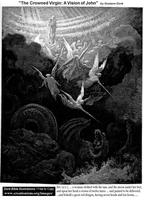
The Crowned Virgin Vision Of John
Gustave Dore
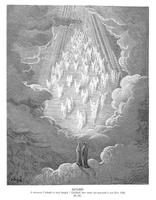
Saturn
Gustave Dore
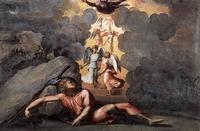
Jacob's Dream
Raphael
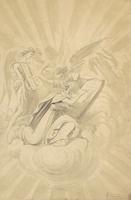
Scène Biblique (Moïse)
Fernand Combes
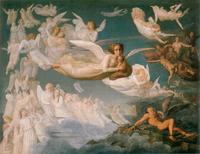
Poème de l'âme 2: Le Passage des âmes
Louis Janmot