
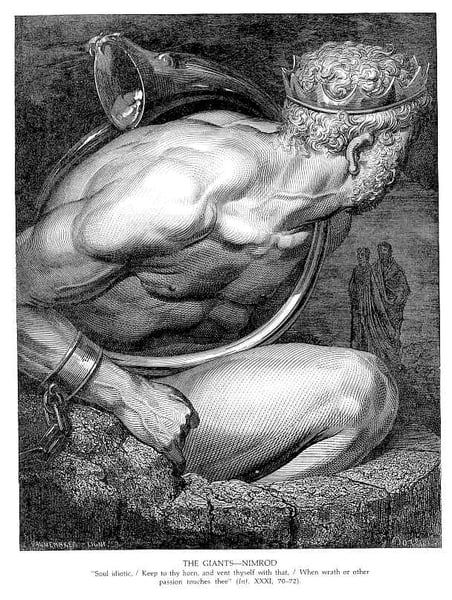
Gustave Dore sanatçısının The Giants--Nimrod eseri hakkında uzman analizi
Tarz: Romanticism · Tür: illustration
Expert Analysis: "The Giants—Nimrod" by Gustave Doré
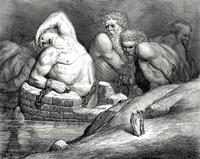
As an illustration executed within the Romantic style, Gustave Doré’s The Giants—Nimrod achieves significance through its embodiment of Romanticism’s core concerns: the sublime, the colossal, and the dramatic interplay between human figures and overwhelming natural or mythological forces. The work is a prime example of how Romantic illustration elevated narrative imagery to a fine art, merging literary inspiration with visceral visual impact.
Significance within Romanticism and Illustration:
-
Sublime Scale and Terror: The depiction of Nimrod—a towering giant rooted in both biblical and literary tradition—directly engages the Romantic fascination with the sublime. The sheer size of the figure relative to any implied viewer creates a sense of awe and terror, a hallmark of Romantic art. Doré uses dramatic contrasts of light and shadow, as well as exaggerated proportions, to evoke the overwhelming power of nature and myth, emphasizing human vulnerability in the face of the colossal.
-
Narrative and Emotion: As an illustration, the work is not a standalone decorative piece but a visual interpretation of a story. Doré’s genius lies in his ability to freeze a moment of profound emotional and narrative tension—here, the giant’s towering presence suggests both defiance and pathos. This aligns with Romanticism’s emphasis on intense emotion, individual experience, and the exploration of heroic (or anti-heroic) figures from literature and legend.
-
Elevation of Illustration: In the Romantic era, illustration moved beyond mere accompaniment to become a respected artistic genre. Doré’s masterful engraving techniques and his ability to render epic scale on a printed page made his illustrations for works like The Divine Comedy (whence Nimrod appears) iconic. The Giants—Nimrod exemplifies how illustration could achieve the same dramatic, philosophical depth as painting, solidifying Doré’s role in expanding the boundaries of the medium.
Conclusion: This artwork is significant because it crystallizes Romantic ideals—the sublime, the monumental, and the emotionally charged narrative—within the accessible genre of illustration, proving that even in printed form, art could evoke the grandest ambitions of the Romantic spirit.
Görsel olarak benzer
İlişkili kompozisyon ve renk paletine sahip 20 eser
Inferno Canto 5
Gustave Dore
Naked Young Man
Peter Paul Rubens
A Faun Grasping a Bunch of Grapes
Peter Paul Rubens
Study of a Nude Man Kneeling on One Knee
Charles-Andre van Loo (Carle van Loo)
Triton Sounding a Conch Shell
Annibale Carracci
One Man Lifting the Legs of Another Man
Charles-Andre van Loo (Carle van Loo)
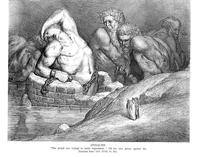
Ephialtes
Gustave Dore
Seated Male Nude
Anton Raphael Mengs
The Giant Antaeus
Gustave Dore
St. Albert
Jusepe de Ribera
Sheet of Studies with St. Jerome, Seated at Right and Resting His Right Forearm on a Book, at Left An Ecclesiastical Figure Wearing a Cope and Miter, and at Bottom Two Putti
Palma il Giovane
The Inferno, Canto 31
Gustave Dore
Abraham's Sacrifice
Francesco de' Rossi (Francesco Salviati), "Cecchino"
Male Academy Nude
Charles-Andre van Loo (Carle van Loo)
Sitting Man
Charles-Andre van Loo (Carle van Loo)
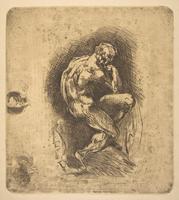
Ugolino
Jean-Baptiste Carpeaux
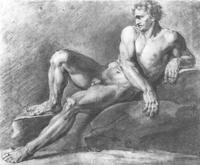
Reclining sitter
Orest Kiprensky
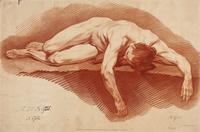
Study of a Nude Man Lying
Charles-Andre van Loo (Carle van Loo)
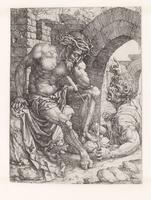
The Mocking of Christ (The man of sorrows)
Mabuse
Sitter
Orest Kiprensky