
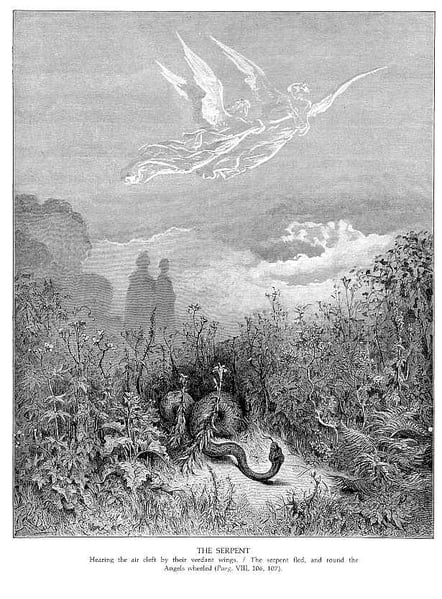
Expertenanalyse zu Gustave Dores The Serpent
Stil: Romanticism · Genre: illustration
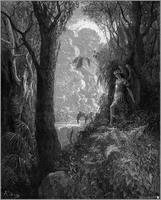
An expert analysis of Gustave Dore's The Serpent must first situate it within its proper context: a masterwork of Romantic illustration that transcends the typical boundaries of its genre. While the supplied facts note its style (Romanticism) and genre (illustration), the true significance lies in how Dore harnesses both to create a profoundly immersive and emotionally charged visual narrative.
Dramatic Sublime and the Romantic Imagination:
As a Romantic artist, Dore embraced the period’s fascination with the sublime—the overwhelming, awe-inspiring, and often terrifying power of nature and the supernatural. The Serpent is not merely a depiction of a creature; it is a depiction of pure, primal force. The serpent dominates the composition, its immense scale dwarfing any human or landscape elements. Dore employs deep contrasts of light and shadow (chiaroscuro) to heighten drama, with the serpent’s sinuous body emerging from an abyssal darkness into a sliver of eerie illumination. This lighting technique intensifies the sense of imminent danger and cosmic struggle, a hallmark of Romanticism’s obsession with extreme emotional states.
Illustration as High Art:
Dore elevated the illustration genre from a mere complement to text into a powerful independent artistic statement. Works like The Serpent were often created for illustrated editions of literary classics—such as Dante’s Inferno or Milton’s Paradise Lost—yet they possess a compositional and technical richness that demands to be viewed as autonomous artworks. His intricate linework, achieved through wood engraving, demonstrates extraordinary control: every scale of the serpent is rendered with meticulous detail, while the surrounding atmosphere dissolves into expressive, almost abstract marks. This fusion of meticulous realism with atmospheric suggestion allows the image to convey narrative tension without needing the accompanying text.
Symbolism and Psychological Impact:
The serpent is a loaded symbol in Romantic art, representing temptation, evil, chaos, or the untamed forces of nature. Dore’s interpretation amplifies its psychological weight. The creature’s coiled posture and piercing gaze create a sense of predatory intelligence, while the dark, claustrophobic setting evokes a nightmare realm. This aligns with the Romantic fascination with the irrational and the subconscious. By placing the viewer at the serpent’s level—neither safely distant nor heroically triumphant—Dore pulls us into the scene, making us complicit in its menace.
Significance within Dore’s Oeuvre and Romanticism:
The Serpent stands out as a quintessential example of Dore’s ability to transform a literary moment into a universal icon. His influence extended far beyond book illustration, inspiring later Symbolists and Surrealists who admired his dreamlike, often macabre visions. Within Romanticism, this work exemplifies the movement’s turn toward the fantastical and the Gothic, where emotion trumps reason and the viewer is invited to confront awe and fear in equal measure.
In sum, The Serpent is significant because it demonstrates how Romantic illustration can achieve the emotional depth and formal power of history painting, while also serving as a timeless, haunting emblem of the sublime—making Dore a pivotal bridge between literary imagination and visual art.
Visuell ähnlich
20 Werke mit ähnlicher Komposition und Farbpalette
Purgatorio Canto 8
Gustave Dore
Don Quixote
Gustave Dore
The Suicides
Gustave Dore
Buonconte Da Montefeltro
Gustave Dore
Geryon--Symbol of Deceit
Gustave Dore
Jacob Finds Rest in a Rugged Landscape and Dreams of a Ladder
Salvator Rosa
journey to the Center of the Earth
Edouard Riou
Tobias and the Angel
Adam Elsheimer
Illustration to "A Week of Kindness"
Max Ernst
The Lustful
Gustave Dore
An Angel Appears to Balaam
Gustave Dore
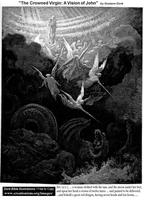
The Crowned Virgin Vision Of John
Gustave Dore
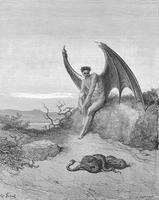
Him, fast sleeping, soon he found In labyrinth of many a round, self-rolled
Gustave Dore
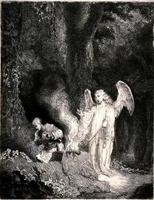
Gideon and the Angel
Ferdinand Bol
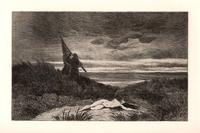
The Werwolf
Felicien Rops
Caprice decorative frames in the middle of a wall with a oval in the upper left a barrel and a hand pours a drink, the lower a syringe, a club, a caduceus, a censer smoke, an hourglass, skulls and bones
Giovanni Battista Piranesi
Elijah Is Nourished by an Angel
Gustave Dore
Transformation into Snakes
Gustave Dore
The Hapies' Wood
Gustave Dore
Satan in Paradise
Gustave Dore