
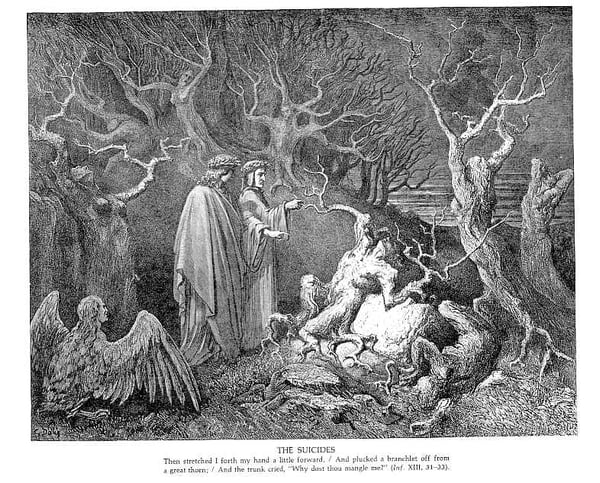
Expertenanalyse zu Gustave Dores The Suicides
Stil: Romanticism · Genre: illustration
Expert Analysis: "The Suicides" by Gustave Doré
Context and Subject
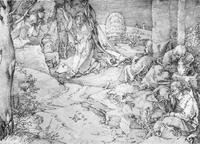
Gustave Doré’s The Suicides is an illustration from his celebrated 1861 series for Dante Alighieri’s Inferno, specifically depicting Canto XIII. In this harrowing scene, Dante and Virgil enter a dark forest of twisted, bleeding trees—the souls of those who committed suicide. Harpies gnaw at the branches, and the trees speak in anguish when broken. Doré captures this moment with visceral intensity, rendering the forest as a nightmarish, claustrophobic landscape where human suffering merges with grotesque nature.
Stylistic Significance within Romanticism
Doré’s work epitomizes the Romantic fascination with the sublime—a blend of awe, terror, and the supernatural. The composition is dominated by jagged, contorted tree trunks that mirror the tormented souls, while the dim, chiaroscuro lighting (strongly influenced by Rembrandt and Piranesi) creates an atmosphere of dread and melancholy. The figures of Dante and Virgil are dwarfed by the monstrous scale, emphasizing human vulnerability against cosmic punishment. Romantic artists often explored extreme emotional states and the macabre; Doré’s Suicides pushes this into a purely visual poetry of despair, unflinching in its depiction of psychological and physical agony.
Role as Illustration
Though an illustration, this work transcends mere visual accompaniment. Doré elevates the genre by using intricate linework and dramatic contrasts to achieve a monumental, almost architectural solidity. The composition guides the viewer’s eye through the chaotic branches toward the tiny, helpless figures, reinforcing Dante’s moral allegory. Doré’s ability to translate textual horror into a self-contained visual masterpiece made him the definitive illustrator of the Romantic era, influencing later Symbolists and Surrealists.
Legacy and Significance
The Suicides is significant because it distills the Romantic obsession with death, punishment, and the unnatural landscape into a single, unforgettable image. It demonstrates how illustration could rival history painting in emotional depth and technical virtuosity. Doré’s Inferno remains a benchmark for literary illustration, and this plate in particular is a chilling meditation on the consequences of despair—a theme that resonates with Romanticism’s darker, rebellious spirit. The work’s enduring power lies in its ability to make the abstract horror of damnation feel tangible and immediate.
Visuell ähnlich
20 Werke mit ähnlicher Komposition und Farbpalette
The Inferno, Canto 13
Gustave Dore
The Hapies' Wood
Gustave Dore
Gideon and the Angel
Ferdinand Bol
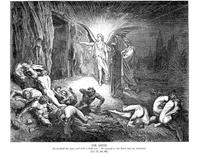
The Angel
Gustave Dore
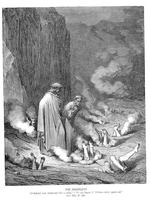
The Punishment of the Simonists
Gustave Dore
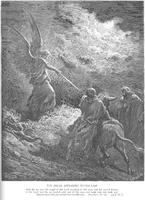
An Angel Appears to Balaam
Gustave Dore
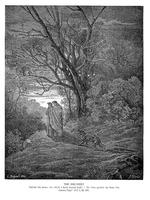
The She-Wolf
Gustave Dore
Ugolino and Archbishop Ruggieri
Gustave Dore
Inferno Canto 4
Gustave Dore
Saul Consults Samuel After the Witch of Endor Has Conjured
Salvator Rosa
The Prophet Ezekiel
Gustave Dore
The Gluttons--Forese
Gustave Dore
The Gluttons
Gustave Dore
The Inferno, Canto 7
Gustave Dore
The Styx--The Irascible
Gustave Dore
Sower of Discord
Gustave Dore
The Death of Korah, Dathan, and Abiram
Gustave Dore
The Eunoe
Gustave Dore
The Plague of Jerusalem
Gustave Dore
Christ on the Mount of Olives
Albrecht Durer