Analisi esperta di Six species di Paul Klee
Stile: Surrealism · Genere: figurative
Expert Analysis: "Six Species" by Paul Klee
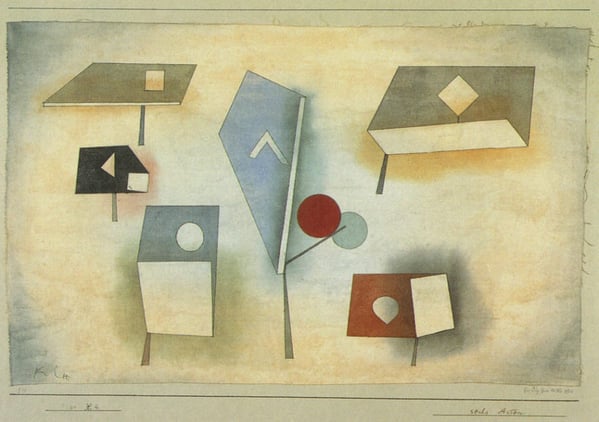
Paul Klee’s Six Species stands as a compelling example of how Surrealist principles were woven into the structured, experimental environment of the Bauhaus. Though Klee taught at the Bauhaus during its most influential years, his work consistently pushed beyond the school’s functionalist reputation toward poetic, dreamlike imagery—making this piece significant for its fusion of two seemingly opposing forces: disciplined composition and subconscious free association.
Significance within Surrealism:
The title Six Species suggests a taxonomy, a scientific ordering of life, yet Klee subverts this rational framework with Surrealist unpredictability. The “species” are likely fantastical hybrid forms—part organic, part geometric—that blur the line between the natural world and the fantastical. In Surrealist fashion, Klee taps into the irrational, presenting creatures that feel both familiar and alien, as if drawn from a waking dream. This approach aligns with the broader Surrealist ambition to unlock the unconscious, but Klee does so with a signature lightness and whimsy that distinguishes his work from the more overtly psychological imagery of contemporaries like Dalí or Miró.
Significance within the Bauhaus Period:
During his Bauhaus years (1920–1931), Klee refined his theories of color and line, often grounding fantastical motifs in rigorous compositional principles. Six Species likely reflects his pedagogical belief that art could be both instinctive and analytical. The figurative forms, while surreal, are probably arranged with the clear spatial logic and color balance Klee taught in his famous course on form and color. This synthesis of controlled design and spontaneous imagination is key to understanding Klee’s unique contribution: he proved that Surrealist freedom could coexist with Bauhaus discipline. The work thus serves as a bridge—embodying the playful, exploratory side of the Bauhaus that is often overshadowed by its Bauhaus’s focus on industrial design.
Figurative Genre and Lasting Impact:
By labeling the genre figurative, the analyst recognizes that Klee never fully abandoned recognizable shapes, even at his most abstract. Six Species likely uses simplified, almost childlike figures—a hallmark of Klee’s style—to evoke a sense of primal, universal forms. This figurative approach makes Surrealist content accessible without sacrificing mystery. In the context of the 1920s avant-garde, Klee’s ability to render the uncanny through delicate line and muted color helped define a more introspective, lyrical strain of Surrealism, influencing not only painters but also later movements in abstract and fantasy art.
In sum, Six Species is significant because it encapsulates Klee’s achievement: a work where the rigorous Bauhaus structure becomes the vessel for Surrealist imagination, creating a quietly revolutionary statement that expanded the boundaries of both movements.
Museum / Gallery
Genere
Stile
Visivamente simili
20 opere con composizione e palette affini
Proun Interpenetrating Planes
El Lissitzky
Utodia
Genis Remacha
Untitled
Balcomb Greene
Egg Beater No. 4
Stuart Davis
Painting
Patrick Henry Bruce
015 Sketch drowings
Genis Remacha
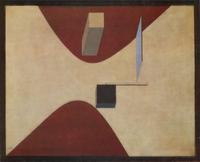
Proun 23, No.6
El Lissitzky
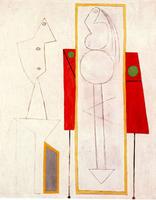
The Studio
Pablo Picasso
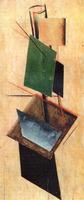
Objectless composition
Alexander Rodchenko
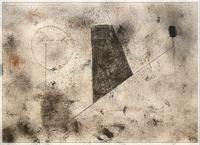
texico
Genis Remacha
Proun 30 T
El Lissitzky
Composition
Alexander Rodchenko
Invention (Composition 31)
Rudolf Bauer
Proun 5 A
El Lissitzky
Composition
El Lissitzky
Proun 19D
El Lissitzky
Decisive Pink
Wassily Kandinsky
Proun 30
El Lissitzky
The Village Fun Fair
Georges Valmier
Folk Motives (variation)
Lajos Kassak