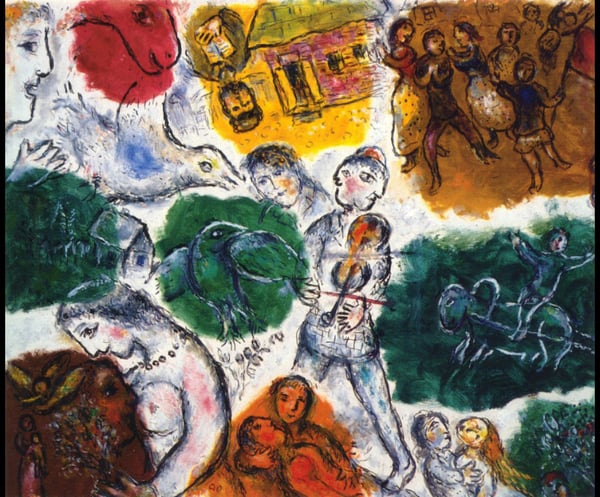
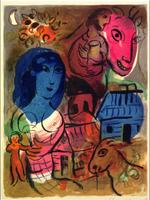
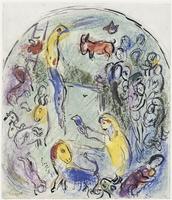
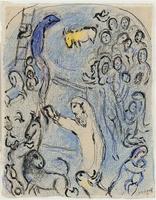
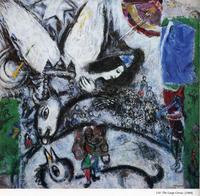
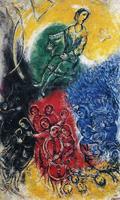
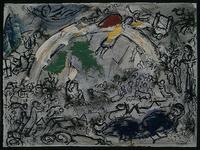
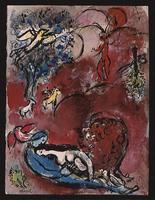
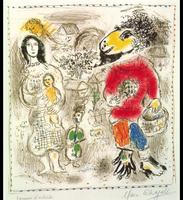
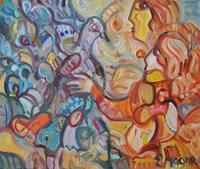
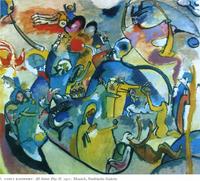
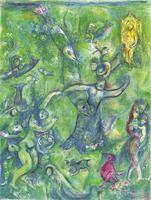
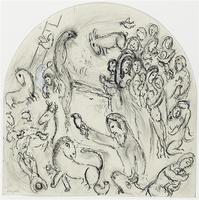
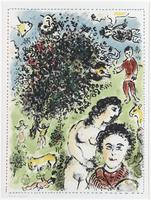
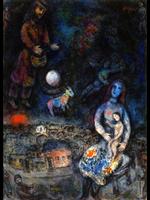
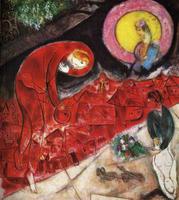
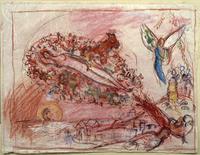
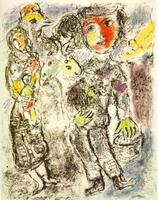
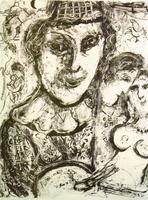
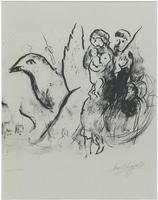
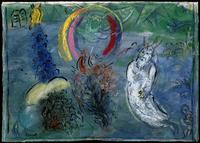
In "Composition," Marc Chagall applies the Surrealist style to the genre of symbolic painting, creating a work that is significant for its fusion of dreamlike imagery with personal, often poetic symbolism. As a Surrealist piece, it aligns with the movement’s goal of bypassing rational thought to access the unconscious—yet Chagall’s particular use of symbolic forms (common to his oeuvre) transforms the canvas into a layered narrative where floating figures, hybrid creatures, and impossible spatial arrangements evoke emotional and spiritual realities. The work’s importance within Surrealism lies in its demonstration that symbolism need not be rigidly coded; instead, it can remain fluid, drawing meaning from the viewer’s own subconscious associations, thereby expanding the movement’s expressive range beyond biomorphic abstraction or overt psychoanalytic references.