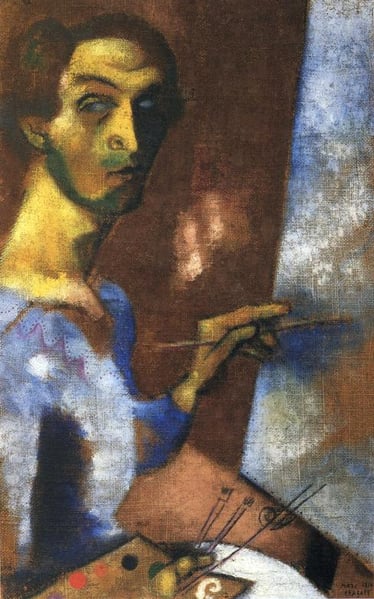
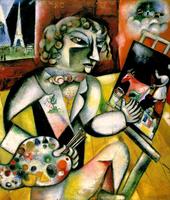
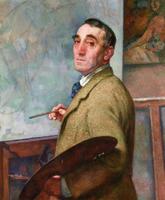
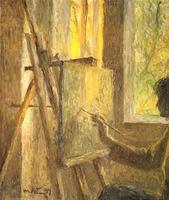
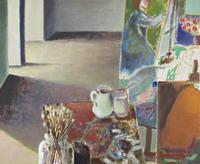
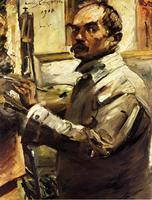
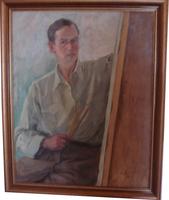
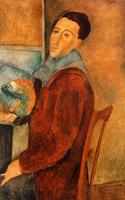
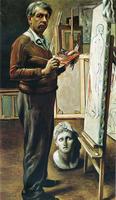
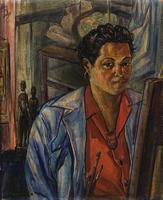
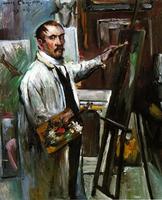
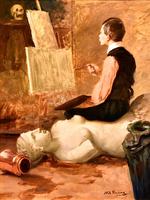
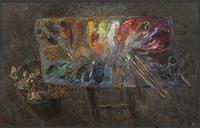
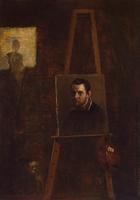
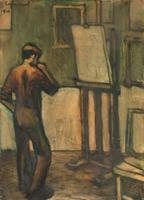
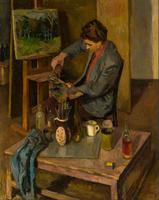
This self-portrait by Marc Chagall is significant as a rare and personal fusion of Cubist formal experimentation with the artist’s own introspective symbolism. Although Chagall is best known for his dreamlike, expressionist scenes, here he adopts Cubism’s fragmented planes and geometric restructuring of space—characteristics of the style—while retaining his distinctive iconography. The inclusion of the easel anchors the work in the self-portrait genre, emphasizing the act of creation itself. What makes the piece noteworthy within Cubism is how Chagall bends the style’s analytical rigor toward a more intimate, even whimsical, subjectivity: the face and studio objects are dissected not just to explore form, but to convey internal states and memory. This convergence of Cubist structure with emotional narrative marks a unique contribution to the movement, expanding its possibilities beyond still life and figure studies into deeply personal terrain.