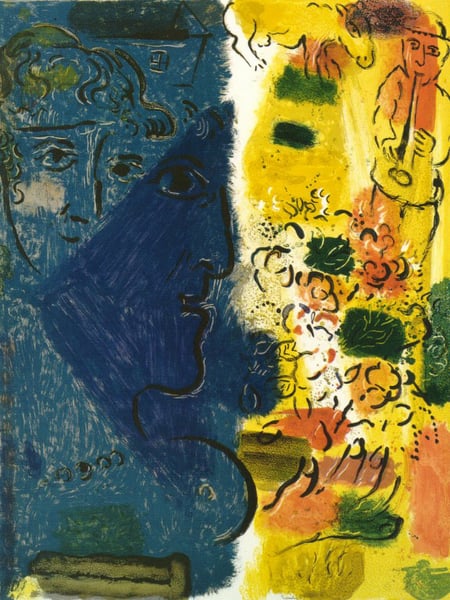
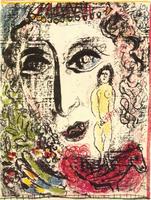
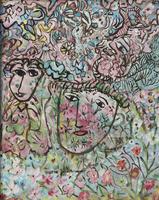
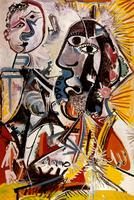
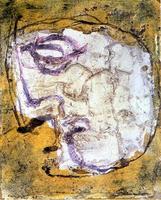
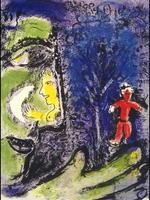
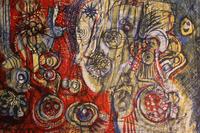
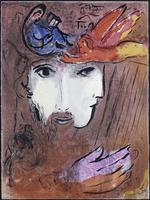
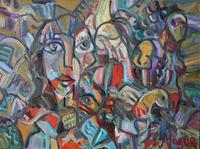
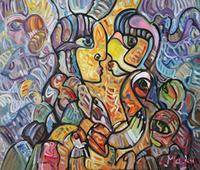
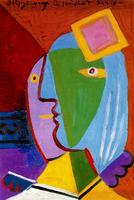
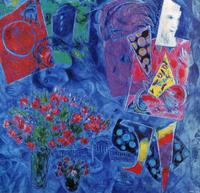
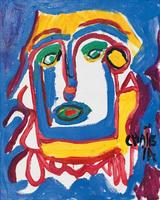
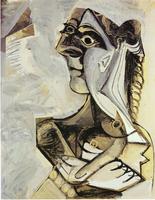
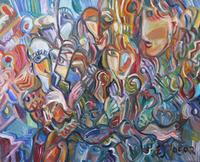
"The Blue Face" by Marc Chagall exemplifies the distinctive fusion of Naïve Art (Primitivism) with deeply personal symbolism that defines his oeuvre. As a portrait within this style, the work deliberately eschews academic realism in favor of flattened perspective, intuitive composition, and bold, non-naturalistic color—hallmarks of Primitivism that celebrate raw, untutored expression. The titular blue face is particularly significant: within Chagall’s vocabulary, this hue often transcends mere description to evoke dreamlike states, spirituality, or melancholic introspection, aligning with the Naïve emphasis on emotional truth over visual accuracy. The portrait’s significance lies in how it marries folk-art simplicity with modernist ambitions, challenging traditional portraiture by prioritizing inner vision over external likeness. In the context of Naïve Art, Chagall’s work stands out for its sophisticated layering of personal and cultural motifs—here, the blue face becomes a vehicle for exploring identity, memory, and the subconscious, all rendered with the disarming directness that defines the Primitivist movement.