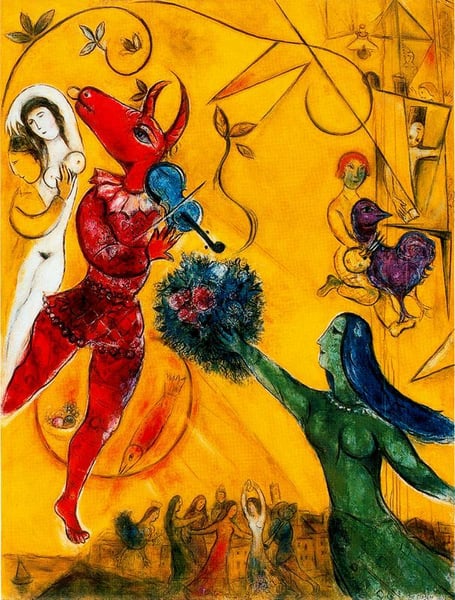
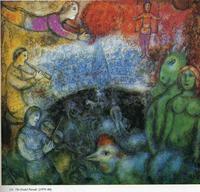
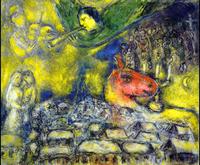
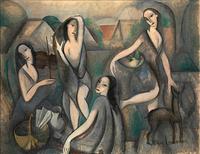
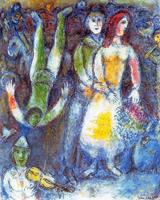
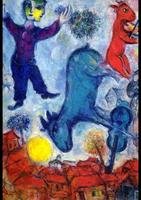
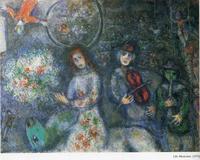
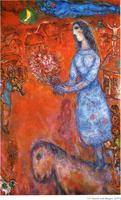
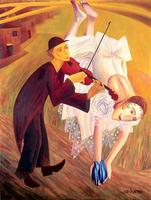
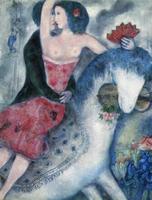
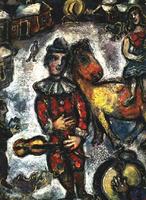
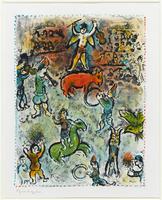
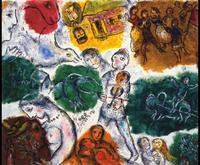
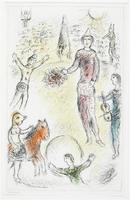
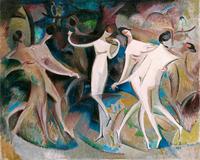
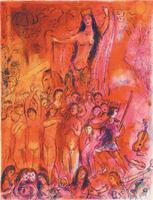
Based solely on the supplied facts—that The Dance by Marc Chagall is a Surrealist genre painting—its significance lies at the intersection of two artistic traditions:
-
Surrealist innovation: The painting likely transforms a mundane, everyday scene (a dance) into a dreamlike, irrational composition. By applying Surrealist techniques—such as unexpected juxtapositions, floating figures, or distorted scale—to a genre typically associated with realism, Chagall pushes the boundaries of what genre painting can represent, infusing ordinary life with psychological depth and symbolic resonance.
-
Genre painting redefined: Traditionally, genre painting captures slices of daily life. Here, that familiar subject becomes a vehicle for Surrealist exploration. The work thus marks a pivotal moment where the quotidian is elevated into the subconscious, challenging viewers to see routine actions as portals to the surreal. This fusion makes The Dance significant as a hybrid that both honors and subverts its artistic origins.