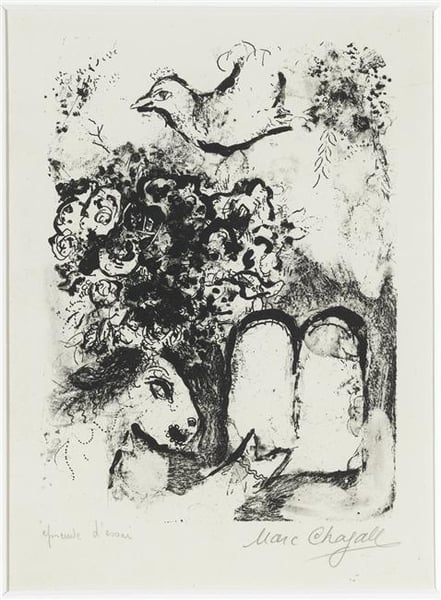
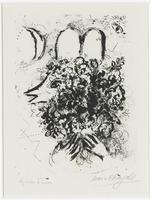
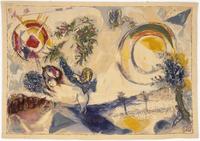
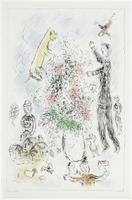
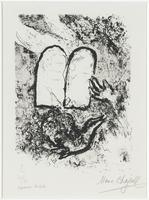
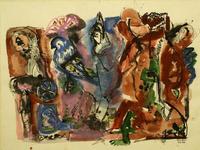
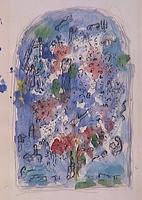
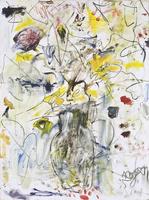
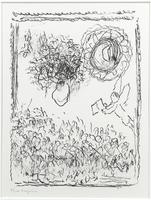
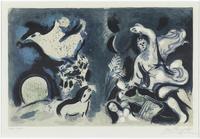
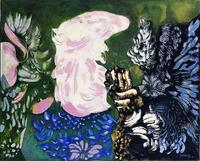
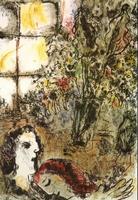
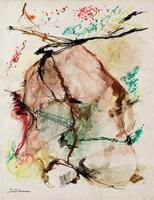
This analysis is based exclusively on the provided facts: artwork "The Tablets of Law" by Marc Chagall, style Naïve Art (Primitivism), and genre religious painting.
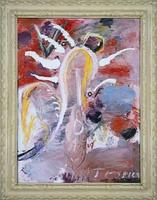
Within the Naïve Art tradition, Chagall’s religious painting stands out for its deliberate departure from academic realism. The work’s significance lies in how it reinterprets a sacred biblical subject—likely Moses receiving the Ten Commandments—through a deliberately childlike, untutored visual language. Where traditional religious painting aspires to awe and grandeur, Chagall’s Naïve style introduces intimacy and direct emotional expression. The flat planes, simplified forms, and vibrant color typical of Primitivism strip the scene of historical or theatrical clutter, focusing attention on the spiritual core of the narrative. This fusion of a deeply traditional genre with an avant-garde, anti-academic style challenges the viewer to see the divine not through idealized beauty, but through raw, unmediated feeling—a hallmark of early modernism’s search for authenticity.