
Expertenanalyse zu Fra Angelicos Last Judgment
Stil: Early Renaissance · Genre: religious painting
This analysis focuses solely on the structured facts provided.
Expert Analysis: "Last Judgment" by Fra Angelico
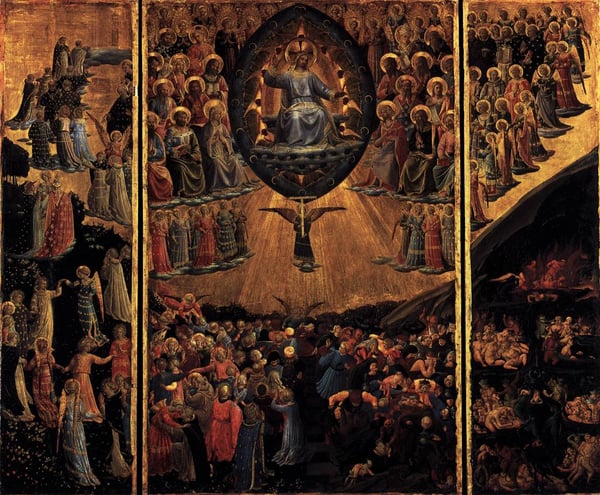
Fra Angelico’s Last Judgment stands as a seminal work of the Early Renaissance, embodying the period’s pivotal shift from medieval symbolism toward greater naturalism and emotional clarity—all within a deeply religious context. As a religious painting, it reinterprets a traditional Christian subject through the lens of humanist spirituality and refined compositional order.
Significance within the Early Renaissance Style:
The work is significant for its harmonious integration of Gothic grace with Renaissance spatial innovation. Fra Angelico arranges the celestial hierarchy with a newly legible perspective—Christ the Judge occupies a central, elevated mandorla, flanked by orderly rows of saints and angels that recede gently into an ethereal gold ground. This structured, symmetrical layout reflects the Early Renaissance obsession with clarity and rational design, while the luminous, jewel-like colors (soft blues, pinks, and golds) retain a devotional, almost otherworldly quality typical of Fra Angelico’s Dominican heritage.
Religious & Thematic Innovation:
Unlike the terrifying, crowded visions of earlier medieval Last Judgments, Fra Angelico emphasizes serene hope and divine mercy over damnation. On the left, the blessed are depicted with calm, individualized faces, walking toward a glowing, walled Paradise—an idealized, orderly vision of Heaven. On the right, the damned are shown in a more compact, less grotesque hell, focusing attention on the saved. This balanced, compassionate treatment reflects the Early Renaissance shift toward human-centered theology, where the faithful could aspire to salvation through piety and reason.
Conclusion:
Fra Angelico’s Last Judgment is a landmark of Early Renaissance religious painting because it synthesizes renewed classical order with profound spiritual sincerity. Its significance lies in its ability to make the divine accessible: through restrained emotion, clear narrative structure, and a luminous palette, it invites viewers into a meditative contemplation of salvation, bridging the medieval and Renaissance worlds.
Museum / Gallery
Visuell ähnlich
20 Werke mit ähnlicher Komposition und Farbpalette
Crucifixion and Last Judgement diptych
Jan van Eyck
the Trinity and the Crucifixion, with Scenes from the Life of Christ
Luca di Tommé
The Ghent Altarpiece (interior)
Jan van Eyck
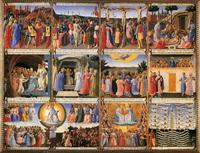
Scenes from the Life of Christ
Fra Angelico
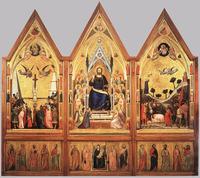
The Stefaneschi Triptych
Giotto
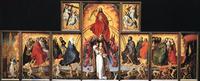
The Last Judgement
Rogier van der Weyden
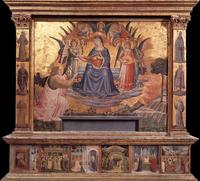
Madonna della Cintola
Benozzo Gozzoli
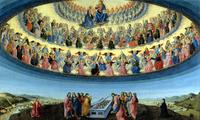
The Assumption of the Virgin
Francesco Botticini
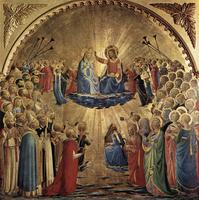
The Coronation of the Virgin
Fra Angelico
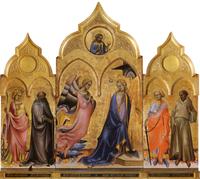
Annunciation Triptych
Lorenzo Monaco
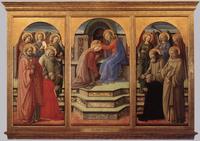
Coronation of the Virgin
Filippo Lippi
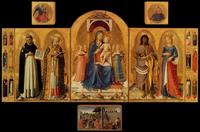
Perugia Altarpiece
Fra Angelico
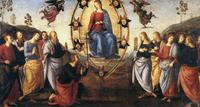
Pala di Fano (Assumption)
Pietro Perugino
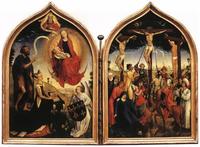
Diptych of Jeanne of France
Rogier van der Weyden
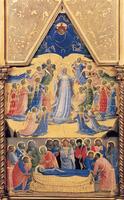
Reliquary Tabernacle
Fra Angelico
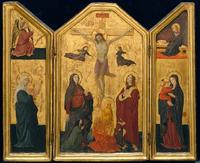
Crucifixion
Paolo Uccello
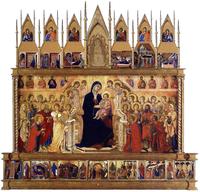
Madonna and Child on a Throne (front side of altarpiece)
Duccio
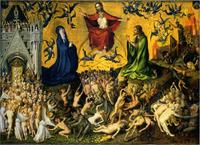
Last Judgement (Altarpiece for the Church of the Holy Apostles in Cologne, central panel)
Stefan Lochner
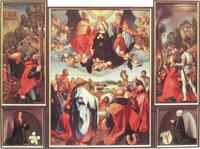
Heller Altarpiece
Albrecht Durer
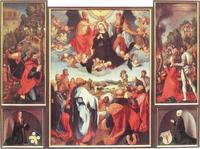
Heller Altarpiece
Matthias Grünewald