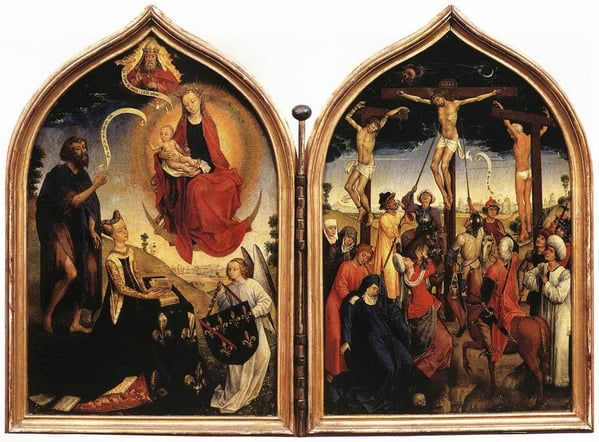
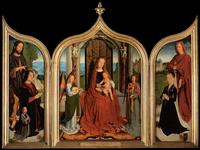
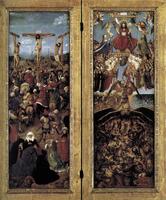
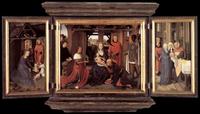
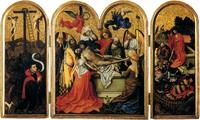
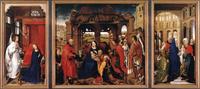
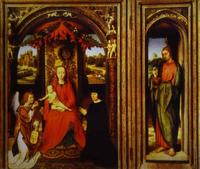
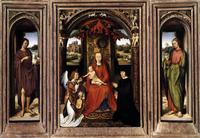
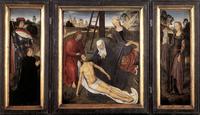
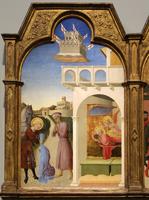
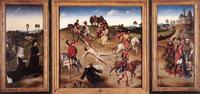
Based solely on the provided facts—that the work is a religious painting in the Northern Renaissance style—the significance of the "Diptych of Jeanne of France" by Rogier van der Weyden lies in its embodiment of the core preoccupations of that period. As a religious painting, it would serve a devotional function, likely intended for private prayer or meditation, a common purpose in Northern Renaissance art. Its diptych format (implied by the title) is also typical of the era, allowing for paired images—often a donor portrait and a sacred figure—that facilitated a personal, intimate connection between the viewer and the divine. In the Northern Renaissance style, such works are characterized by meticulous naturalism, vivid symbolism, and an emotional intensity that makes spiritual narratives feel immediate and human. While the specific iconography and composition are not detailed here, the work’s significance rests on its role as a quintessential example of how Northern Renaissance religious painting merged technical precision with profound spiritual meaning.