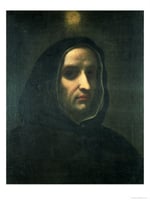
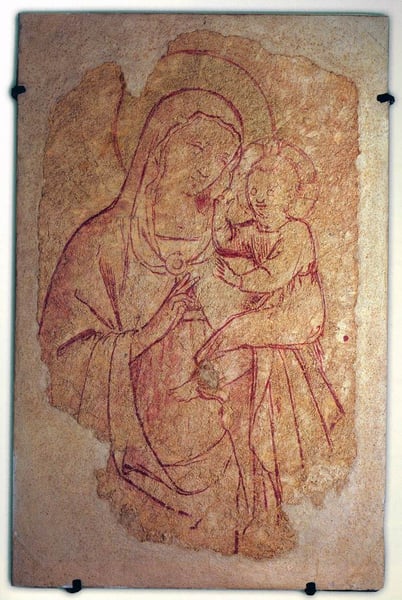
Analisi esperta di Virgin and Child di Fra Angelico
Stile: Early Renaissance · Genere: religious painting
Expert Analysis of Virgin and Child by Fra Angelico
Fra Angelico’s Virgin and Child stands as a radiant exemplar of Early Renaissance religious painting, a period that sought to harmonize devotional intensity with new naturalistic and spatial principles. The work’s significance lies in its masterful synthesis of medieval spiritual gravity and the emerging humanist sensitivity—a hallmark of Fra Angelico’s own transformative role in Quattrocento art.
Spiritual and Emotional Directness
As a religious painting, Virgin and Child is not merely an icon but a meditation on divine tenderness. The Virgin’s serene, downcast gaze and the Christ Child’s gentle interaction create an intimate, accessible holy scene. Fra Angelico, a Dominican friar, infuses the work with a palpable devotion: the figures embody a celestial purity while retaining human warmth, bridging the sacred and the earthly. This duality reflects the Early Renaissance emphasis on making religious narratives relatable without sacrificing their otherworldly aura.
Early Renaissance Innovations
Stylistically, the painting demonstrates key Early Renaissance advances. Fra Angelico employs a delicate, luminous palette—soft blues, golds, and flesh tones—that both echoes the gilded traditions of Byzantine icons and introduces a more naturalistic modeling of light and shadow. The composition, though simple, reveals a budding sense of spatial depth, with the figures subtly recessed against a gold or architectural background (common in his Virgin and Child variants). This balance of flat, decorative patterns (a remnant of Gothic art) with volumetric form signals the period’s transitional aesthetic.
Significance in Fra Angelico’s Oeuvre
Fra Angelico’s Virgin and Child is pivotal for its fusion of humility and grace. It epitomizes his reputation as il Beato (“the Blessed”)—an artist whose technical skill served a higher spiritual purpose. The work’s enduring significance lies in how it uses Early Renaissance tools (naturalism, refined color, compositional clarity) not for stylistic show, but to render the divine as an immediate, comforting presence—a goal that defines the era’s most profound religious art.
Museum / Gallery
Visivamente simili
20 opere con composizione e palette affini
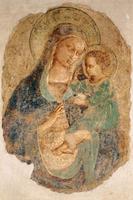
Madonna and Child
Fra Angelico
Madonna Del Latte
Antoniazzo Romano
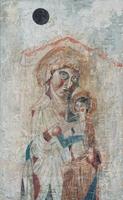
Madonna con bambino
Gustavo Foppiani
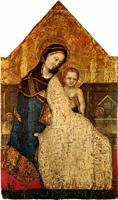
Madonna with Child Gentile da Fabriano
Gentile da Fabriano
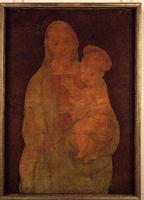
The Madonna of the Grand Duke
Jean Auguste Dominique Ingres
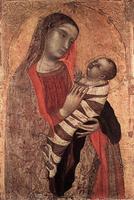
Madonna and Child
Ambrogio Lorenzetti
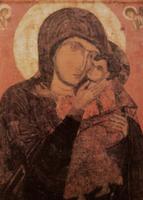
Panagia Glykofiloussa (The Sweet Kissing Madonna)
Orthodox Icons
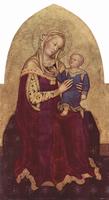
Madonna
Gentile da Fabriano
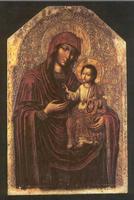
Icon of the Mother of God from the Maniava Hermitage iconostasis
Yov Kondzelevych
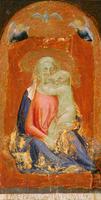
Madonna of Humility
Masaccio
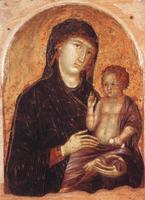
Madonna and Child
Duccio
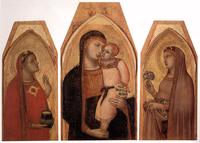
Madonna and Child with Mary Magdalene and St Dorothea
Ambrogio Lorenzetti
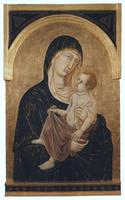
Madonna
Duccio
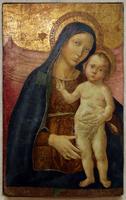
Madonna Col Bambino
Antoniazzo Romano
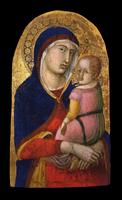
Madonna with Chid
Pietro Lorenzetti
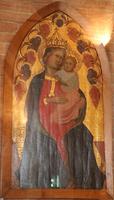
Madonna and Child with Seraphim and Cherubim
Cennino Cennini
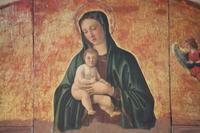
Trittico della Natività (detail)
Gentile Bellini
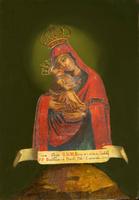
Theotokos of Pochaev
Orthodox Icons
Kharkiv Theotokos of Vladimir
Orthodox Icons
Madonna with Chid
Pietro Lorenzetti