
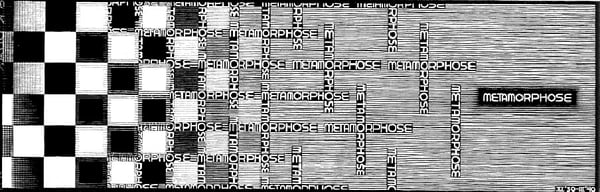
M.C. Escher sanatçısının Metamorphosis II excerpt 7 eseri hakkında uzman analizi
Tarz: Op Art · Tür: tessellation
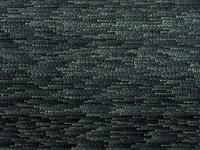
Expert Analysis: "Metamorphosis II excerpt 7" by M.C. Escher
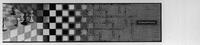
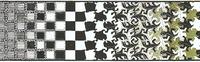
M.C. Escher’s Metamorphosis II (1939–1940) is a monumental woodcut that spans nearly 13 feet, depicting a seamless, cyclical transformation of forms. The "excerpt 7" segment captures a critical transitional moment within this iconic tessellation sequence. Escher’s work bridges mathematical precision and optical illusion, making it a foundational precursor to the Op Art movement, even though he is often classified separately.
Significance within Op Art and Tessellation Genres:
-
Tessellation as Structured Illusion – This excerpt exemplifies Escher’s mastery of interlocking, repeating motifs, where positive and negative spaces are equally weighted. The forms morph from one distinct shape (e.g., birds, fish, reptiles, or geometric patterns) into another, challenging the viewer’s ability to separate figure from ground. This ambiguity is a hallmark of Op Art’s goal to destabilize perception.
-
Optical Dynamism – Unlike static tessellations, Escher introduces a fluid, evolving sequence. The "excerpt 7" likely captures a pivotal point where a geometric pattern begins to animate into a living creature or vice versa. The rhythm of line and shape creates a kinetic effect: the eye is forced to follow the metamorphosis, generating a sense of motion and perceptual flicker—a key Op Art technique.
-
Mathematical and Cognitive Play – Escher’s work is rooted in geometry (often inspired by the Alhambra’s Moorish mosaics) but transcends decoration by embedding a narrative of transformation. In Metamorphosis II, the gradual shift from abstract tiles to recognizable animals (and back to text and chessboard) reveals the underlying unity of all patterns. This excerpt, therefore, is not merely a decorative motif but a philosophical statement on the fluidity of reality—a concept later explored by Op artists like Victor Vasarely.
What Makes This Excerpt Stand Out:
-
Precision in Transition – The excerpt likely highlights Escher’s meticulous hand-cut lines, where each shape’s contour serves dual purposes: it defines one figure while simultaneously outlining the adjacent one. This double-function is a technical tour de force.
-
Psychological Impact – The viewer experiences a perceptual "aha" moment as the image flips between interpretations. This ambiguous figure-ground relationship is central to Op Art’s fascination with the eye-brain connection.
In summary, Metamorphosis II excerpt 7 is significant because it crystallizes Escher’s unique fusion of tessellation art with optical illusionism—anticipating Op Art’s core principles while pushing the boundaries of graphic narrative. It demonstrates that tessellation can be both rigidly systematic and visually hypnotic, a legacy that continues to influence contemporary digital and kinetic art.
Görsel olarak benzer
İlişkili kompozisyon ve renk paletine sahip 20 eser
Metamorphosis II excerpt 1
M.C. Escher
Metamorphosis III excerpt 1
M.C. Escher
Pannello a scacchi
Mario Nigro
Musical Painting: Giuseppe Verdi, Requiem
Robert Strubin
#100
Adolf Fleischmann
Movement in Squares
Bridget Riley
Metamorphosis III excerpt 8
M.C. Escher
Cinetic Composition
Almir Mavignier
Fünfzehn systematische Farbreihen mit vertikalen Verdichtungen
Richard Paul Lohse
Sketch for a poster of the Vienna Workshop
Koloman Moser
Mirror six panels #3
Roy Lichtenstein
Composição Série Puncton
Almir Mavignier
Serigrafia
Luis Sacilotto
V97542S
Ben Spider
Agamograph
Yaacov Agam
Metamorphosis II excerpt 2
M.C. Escher
Neuer Dreiklang #2
Gunter Fruhtrunk
The Pythagorean Theorem
Alfred Jensen
Composition
Yaacov Agam
1965/1 - ∞, Detail
Roman Opalka