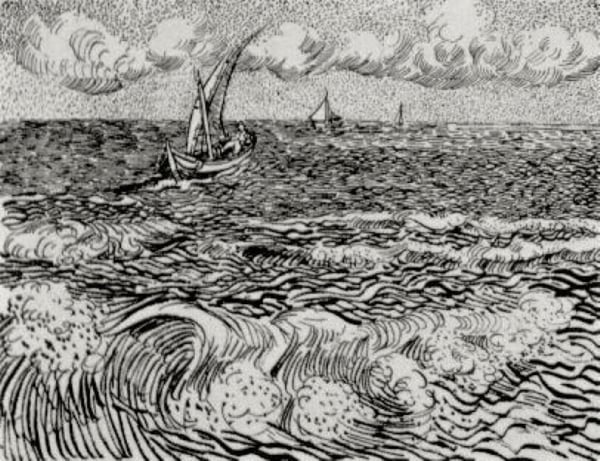
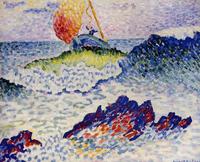
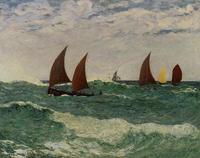
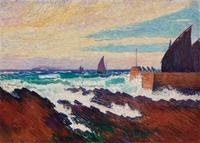
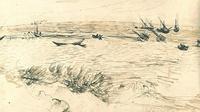
As a Post-Impressionist marina, Vincent van Gogh’s A Fishing Boat at Sea is significant for how it transforms a traditional maritime subject into an intense, personal expression. The work exemplifies the Post-Impressionist departure from naturalistic depiction, prioritizing emotional resonance and symbolic color over precise representation. Van Gogh’s treatment of the sea and boat—typical of the marina genre—becomes a vehicle for conveying movement, mood, and the artist’s own psychological state. This painting marks a key moment in the transition from Impressionism’s focus on light and atmosphere toward a more subjective, modern visual language, where the subject is filtered through the artist’s distinctive vision. Its significance lies in how van Gogh elevates a conventional scene into an iconic statement of expressive power, foreshadowing the emotional intensity that would define his later masterpieces.