Expert Analysis: "A Lane in the Public Garden with Benches" by Vincent van Gogh
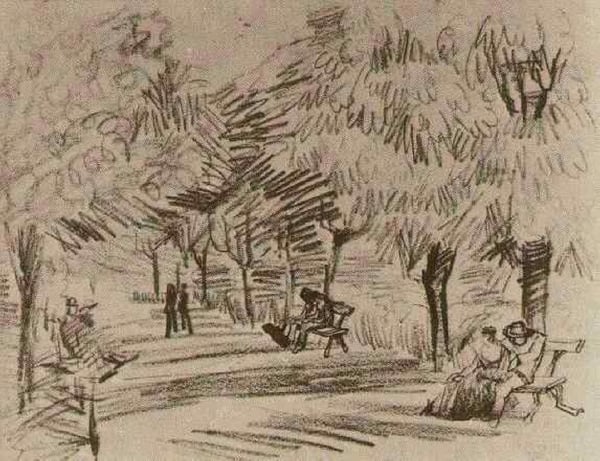
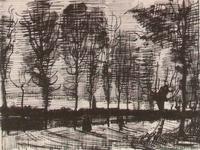
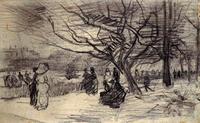
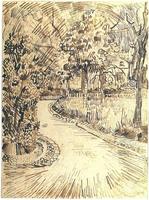
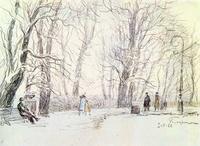
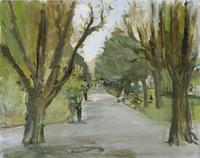
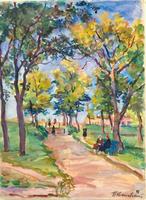
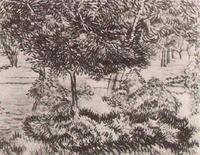
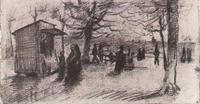
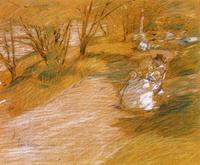
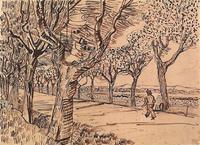
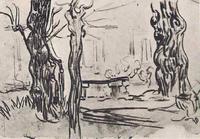
This work is a compelling example of van Gogh’s practice as a draftsman and colorist within the Post‑Impressionist idiom. Classified as a sketch and study, it holds particular significance for understanding his working method. Unlike a finished canvas, a study allows us to witness the artist’s immediate response to a motif – here, a quiet public garden lane lined with benches. The composition is likely a rapid exploration of perspective, light, and the interplay of natural forms.
In the context of Post-Impressionism, van Gogh’s sketches were not mere preparatory exercises but autonomous expressions of emotion through line and color. Even in this study, one can anticipate the signature energetic, rhythmic strokes that would define his mature style. The subject – a mundane, everyday garden – is elevated by a subjective, almost fervent treatment. The benches and pathway become conduits for a psychological atmosphere, echoing the movement’s commitment to conveying inner experience over literal representation.
As a study, this piece is significant because it reveals the foundational intelligence behind van Gogh’s more famous finished works. It shows how he distilled complex scenes into essential, dynamic shapes, and how he used color not just descriptively, but to create resonance and tension. Ultimately, "A Lane in the Public Garden with Benches" stands as a direct document of van Gogh’s creative process – a moment where the raw energy of Post-Impressionism is captured in its most honest, unpolished form.