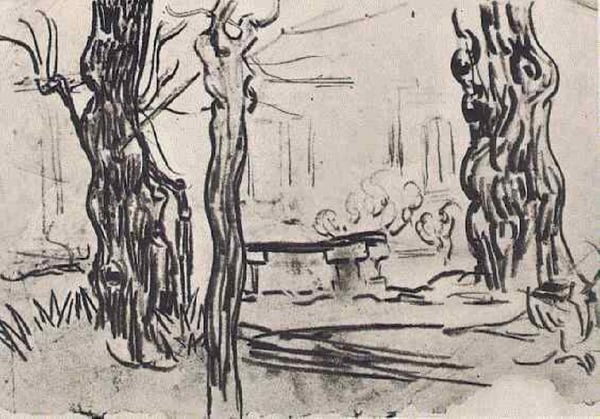
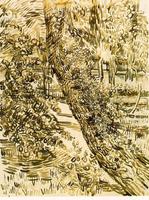
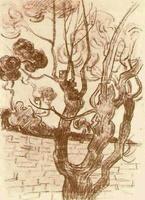
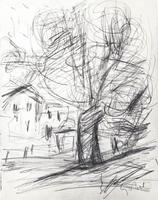
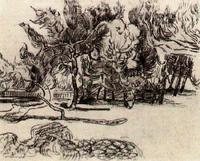
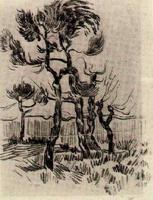
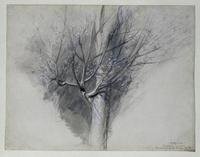
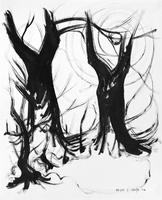
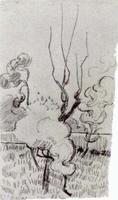
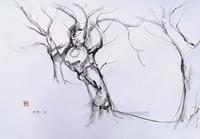
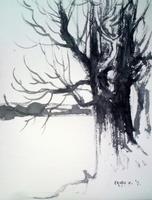
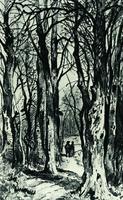
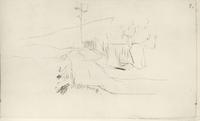
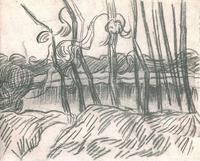
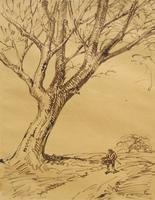
This sketch-study by Vincent van Gogh, executed during his voluntary confinement at the asylum of Saint-Paul-de-Mausole in Saint-Rémy, offers a rare, intimate glimpse into the artist’s creative process. As a Post-Impressionist work, it transcends mere preparatory drawing: van Gogh uses rapid, expressive strokes to capture the raw vitality of twisted tree trunks and a stark stone bench, turning a quiet asylum garden into a charged psychological landscape.
The piece is significant for several reasons. First, it exemplifies van Gogh’s shift from observation to emotion—a hallmark of Post-Impressionism. Rather than reproducing the scene literally, he distills its essence through dynamic mark-making: the gnarled roots appear to writhe with life, while the bench sits as a silent, stabilizing counterpoint. Second, as a sketch and study, it reveals his rigorous discipline; even in a medium often dismissed as unfinished, he tests compositions and contrasts that would later appear in more finished canvases. Finally, this work is a poignant document of his state of mind—the asylum garden was both a sanctuary and a cage, and here, the dense network of trunks and branches suggests both confinement and the irrepressible energy of nature. In van Gogh’s hands, a simple study becomes a powerful meditation on life, resilience, and the transformative power of line.