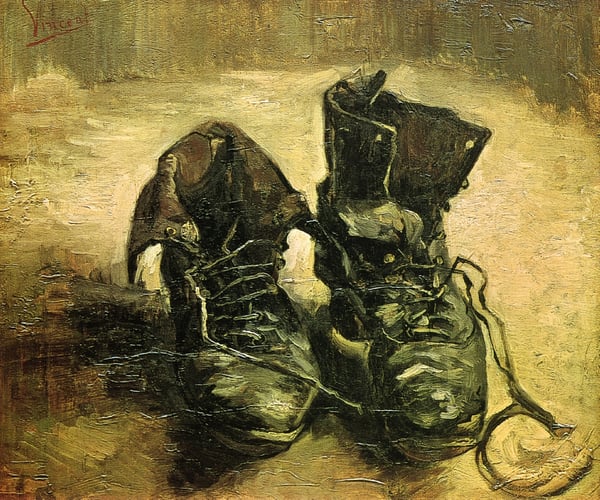
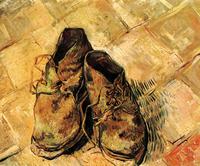
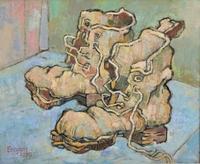
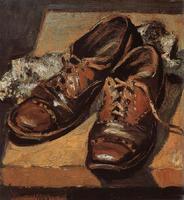
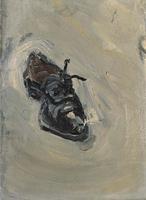
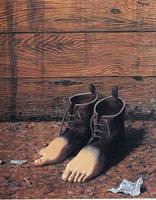
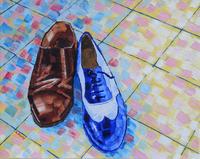
This work is a prime example of how Vincent van Gogh redefined the still-life genre within Post-Impressionism. At first glance, the subject—a pair of worn shoes—appears mundane, but van Gogh transforms it into a powerful emotional and symbolic statement. The painting's significance lies in its rejection of realistic depiction in favor of expressive distortion: the shoes are rendered with thick, swirling impasto brushstrokes and earthy, vibrant tones that evoke the fatigue and dignity of labor. This move away from mere visual accuracy toward subjective, emotional expression is a hallmark of Post-Impressionism. By imbuing a simple, humble object with profound human resonance, van Gogh challenges traditional hierarchies of genre painting, elevating the everyday to the level of profound psychological and social commentary. The work thus stands as a crucial step in the development of modern art, where meaning is conveyed through the artist's personal, tactile engagement with the canvas rather than through literal representation.