
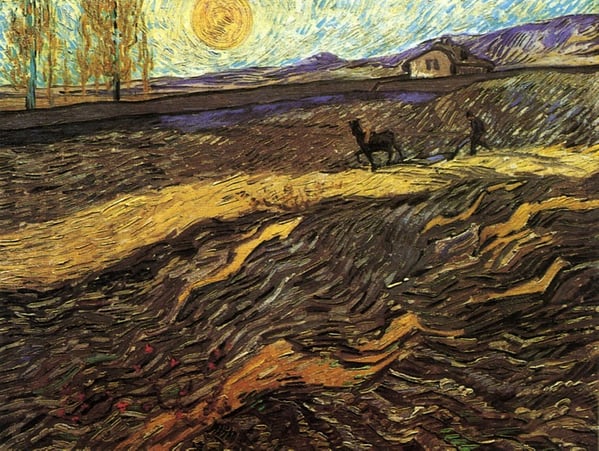
Enclosed Field with Ploughman
Dettagli
Analisi esperta di Enclosed Field with Ploughman di Vincent van Gogh
Stile: Post-Impressionism · Genere: landscape
Expert Analysis of Enclosed Field with Ploughman by Vincent van Gogh
Painted in 1889 during van Gogh’s stay at the asylum in Saint-Rémy-de-Provence, Enclosed Field with Ploughman is a quintessential example of Post-Impressionist landscape that transcends mere topographical representation. The work captures a walled agricultural plot – a recurring motif in van Gogh’s late period – with a solitary ploughman guiding his horse-drawn plow across the furrowed earth. The scene is not a literal record but a deeply subjective, emotionally charged vision of rural labor and cyclical human toil.
Significance within Post-Impressionism:
Van Gogh’s approach here epitomizes the Post-Impressionist break from naturalistic depiction in favor of expressive color, symbolic form, and psychological intensity. The brushwork is energetic and rhythmic – short, swirling strokes in the sky, parallel hatchings in the soil – creating a surface that vibrates with the artist’s own restless energy. The palette is deliberately heightened: vivid yellows and ochres for the field, contrasted with deep blues and greens in the sky and enclosing walls. This chromatic intensity does not mimic nature but communicates the artist’s emotional state – a blend of awe at the Provençal landscape and a somber meditation on mortality and solitude.
Thematic and Structural Innovations:
The “enclosed field” itself is a loaded symbol. In van Gogh’s oeuvre, these walled plots often represent both sanctuary and confinement – a reflection of his asylum life. The ploughman, seen from behind, becomes an anonymous, eternal figure of labor, reduced to a silhouette against the undulating earth. The composition is radical: the high horizon line, the steep perspective of the furrows, and the absence of any distant vista force the viewer’s eye into a tight, almost claustrophobic space. This flattening of depth, combined with the sinuous lines of the plowed soil, prefigures early Expressionist and even Fauvist concerns.
Art-Historical Legacy:
Enclosed Field with Ploughman belongs to a series of similar “enclosed fields” that van Gogh painted during his most prolific yet troubled period. These works demonstrate his ability to find profound meaning in the most ordinary rural subject – a plow, a field, a horse – elevating them to meditations on human perseverance. The painting’s fusion of vigorous technique, symbolic content, and raw emotion marks it as a mature masterpiece of Post-Impressionism, bridging Impressionism’s optical concerns with the emotional and spiritual urgency of 20th-century modernism.
Museum / Gallery
Visivamente simili
20 opere con composizione e palette affini
Laboureur dans un Champ
Vincent van Gogh
Enclosed field with rising sun
Vincent van Gogh
Wheat Field with Rising Sun
Vincent van Gogh
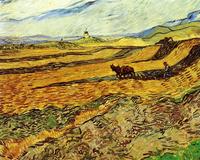
Field and Ploughman and Mill
Vincent van Gogh
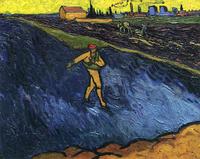
The Sower Outskirts of Arles in the Background
Vincent van Gogh
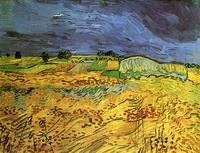
The Fields
Vincent van Gogh
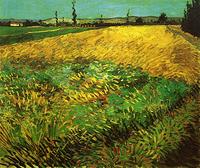
Wheat Field with the Alpilles Foothills in the Background
Vincent van Gogh
Road with Cypresses
Vincent van Gogh
Wheat Field behind Saint-Paul Hospital with a Reaper
Vincent van Gogh
Wheatfield with Mountains in the Background
Vincent van Gogh
The Plain at Auvers
Vincent van Gogh
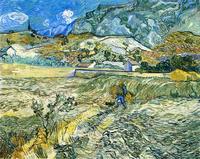
Enclosed Field with Peasant
Vincent van Gogh
Wheat Field with Cypresses
Vincent van Gogh
Wheat Field behind Saint Paul Hospital with a Reaper
Vincent van Gogh
Landscape with Bridge across the Oise
Vincent van Gogh
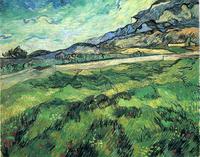
The Green Wheatfield behind the Asylum
Vincent van Gogh
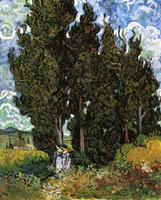
Cypresses with Two Women
Vincent van Gogh
Landscape in the Rain
Vincent van Gogh
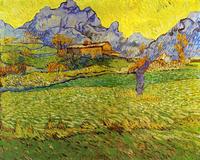
A Meadow in the Mountains: Le Mas de Saint-Paul
Vincent van Gogh
Two Poplars on a Hill
Vincent van Gogh