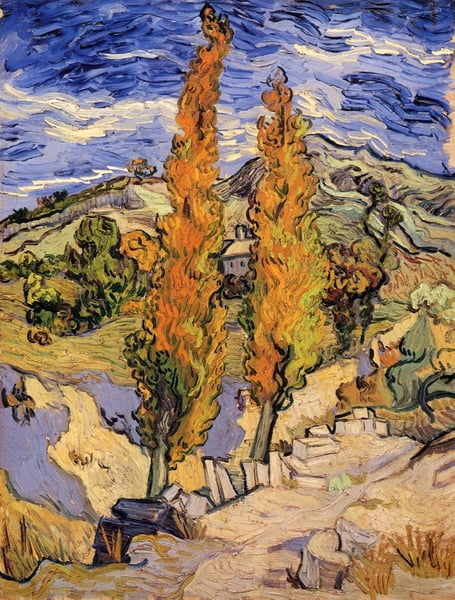
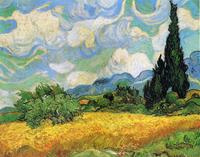
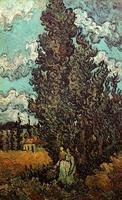
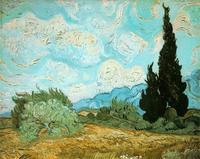
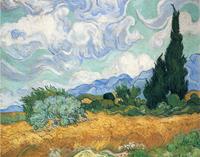
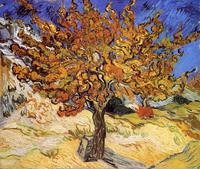
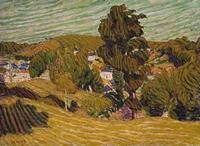
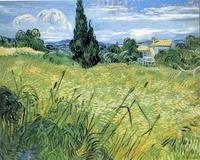
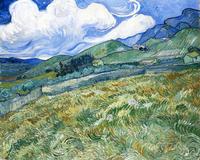
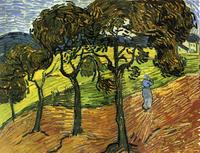
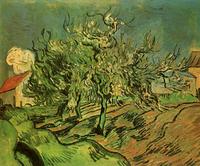
This landscape, Two Poplars on a Hill, exemplifies Vincent van Gogh’s Post-Impressionist approach to the genre. While the supplied facts do not include specific details about the painting’s composition, its significance lies in how it embodies the core tenets of Post-Impressionism: a deliberate departure from naturalistic representation in favor of heightened emotional expression and symbolic form. Van Gogh’s landscapes often transform ordinary rural motifs—like a pair of poplars—into charged, personal visions through vigorous brushwork and unconventional color. In this context, the work is significant as a prime example of how van Gogh used landscape to convey psychological intensity, a hallmark that distinguishes Post-Impressionism from its Impressionist predecessor. The painting’s focus on two isolated trees on a hill also suggests van Gogh’s recurring interest in resilience and solitude, themes that resonate throughout his oeuvre and reflect the broader Post-Impressionist concern with subjective experience over objective depiction.