
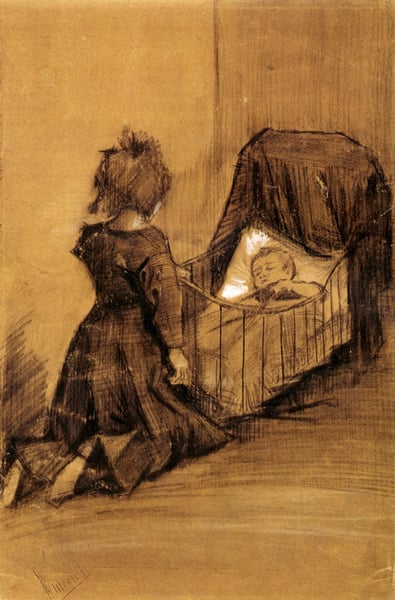
Girl Kneeling by a Cradle
Details
Expert analysis of Vincent van Gogh’s Girl Kneeling by a Cradle
Style: Realism · Genre: genre painting
Expert Art Historical Analysis: "Girl Kneeling by a Cradle" by Vincent van Gogh
Style: Realism | Genre: Genre painting
Vincent van Gogh’s “Girl Kneeling by a Cradle” is a compelling example of his early engagement with the Realist tradition, a period before his groundbreaking Post-Impressionist works. Painted during his time in the Netherlands (c. 1883), this work reflects the influence of Dutch Realist masters such as Jean-François Millet and Anton Mauve, whom van Gogh deeply admired.
Significance within Realism and Genre Painting:
-
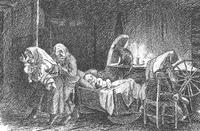
Ordinary Life Elevated: As a genre painting, the work captures a quiet, intimate moment of domestic labor—a girl kneeling beside a cradle. Realism prized the depiction of everyday, unglamorous scenes, and van Gogh’s choice here underscores his commitment to portraying the dignity of common people, especially peasants and workers. The subject is not idealized; she is absorbed in a simple, repetitive task, embodying the Realist focus on authenticity over romanticism.
-
Subtle Emotional Depth: While van Gogh’s later works blaze with vibrant color and expressive brushwork, this canvas is marked by a subdued, earthy palette—browns, grays, muted ochres—typical of early Dutch Realism. Yet even here, the artist’s empathy is palpable. The girl’s bowed head and gentle posture convey tenderness, care, and a quiet narrative of maternal or familial devotion. This emotional resonance, drawn from a minimum of gesture, is a hallmark of van Gogh’s ability to find profound meaning in the mundane.
-
Technical Roots of a Master: The painting showcases van Gogh’s disciplined Realist training: careful modeling of form, attention to light falling on the cradle and figure, and a restricted tonal range that builds atmosphere. This work is significant as a foundation—it reveals the observational rigor van Gogh would later transform into his signature expressive style. The rough, visible brushwork in some areas hints at the emerging energy that would define his mature period.
Historical Context: Executed during van Gogh’s time in Nuenen (the same period as The Potato Eaters), this painting aligns with his mission to “speak for those who cannot speak for themselves.” It stands as a testament to his belief that art’s highest purpose is to render the soul of everyday existence—a conviction that would remain central to his entire oeuvre.
In summary, “Girl Kneeling by a Cradle” is significant as a quiet masterpiece of Realist genre painting, documenting van Gogh’s deep-rooted respect for the beauty of ordinary life and his nascent ability to charge the simplest scene with profound human warmth.
Museum / Gallery
Visually similar
20 works with related composition and palette
Girl Kneeling in Front of a Cradle
Vincent van Gogh
Domestic Interior, Wissant
Léon Augustin Lhermitte
Evening Prayer
Anna Ancher
Cradle
Vincent van Gogh
The First child
Joaquín Sorolla
La Fille a Maman
Theophile Steinlen
Mãe e Criança Chorando
Jose Pancetti
Cradle Song (Nursery Rhymes)
Rudolf Schweitzer-Cumpana
Guarded Sleep
Hermann Graf
Berény Róbert. Alvó
Berény Róbert
In the children's chamber
Kuzma Petrov-Vodkin
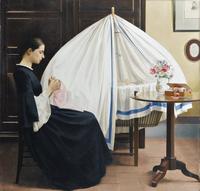
Delfina devant le berceau de Sylvie
Bernard Boutet de Monvel
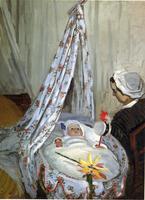
Jean Monet in the Craddle
Claude Monet
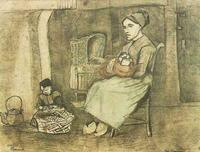
Mother at the Cradle and Child Sitting on the Floor
Vincent van Gogh
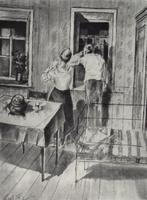
The first sketch for the painting in 1919
Kuzma Petrov-Vodkin
Family Artist
Ivan Kramskoy
Birth Announcement for Anne-élisabeth Besnard
Paul-Albert Besnard
A lullaby
Meyer von Bremen
Daughter Frances
Frederick Carl Frieseke
Underjordiske
Theodor Severin Kittelsen