
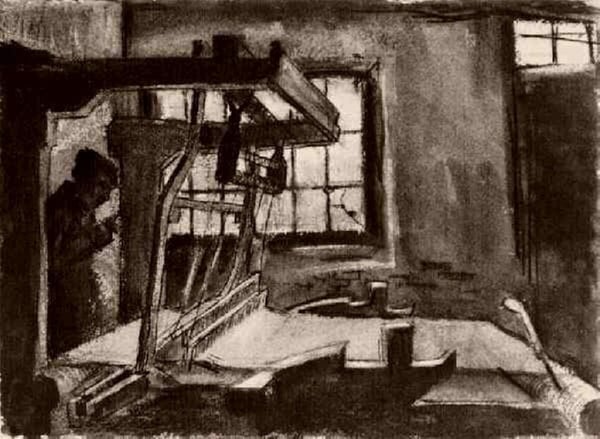
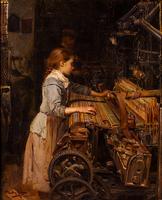
Interior with a Weaver Facing Right
Ayrıntılar
Vincent van Gogh sanatçısının Interior with a Weaver Facing Right eseri hakkında uzman analizi
Tarz: Realism · Tür: genre painting
Expert Analysis: "Interior with a Weaver Facing Right" (1884) by Vincent van Gogh
Vincent van Gogh’s Interior with a Weaver Facing Right is a compelling early work that firmly belongs to his Realist period—a phase often overshadowed by his later, more famous Post-Impressionist explosions of color and emotion. Painted in the village of Nuenen (the same period that produced The Potato Eaters), this piece reveals van Gogh’s deep engagement with the social realism tradition championed by Jean-François Millet and the Hague School.
Significance within Realism and van Gogh’s Oeuvre:
-
A Documentary of Peasant Labor
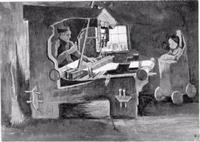
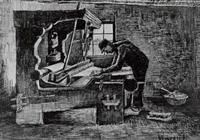
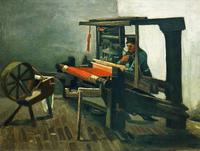
The painting is a genre scene that records the quiet, repetitive toil of a weaver—a figure van Gogh painted over a dozen times during his Nuenen years. Here, the weaver sits at his loom, facing right, hunched in concentration. The loom dominates the composition, its heavy wooden frame and intricate threads forming a near-architectural grid. Van Gogh’s palette is muted: browns, grays, and dull greens, with only a faint warmth in the weaver’s shirt. This somber color scheme is characteristic of Dutch Realism, emphasizing the gritty, unidealized truth of working-class life. -
Influence of Millet and Social Commentary
Van Gogh explicitly admired Millet’s depictions of rural laborers. In this canvas, he adopts Millet’s sympathetic yet unsentimental gaze. The weaver is not a romanticized figure; he is a component of the machinery he operates. The dark interior, lit only by a small window, underscores the claustrophobia of industrial hand-labor. This aligns with Realism’s mission: to portray everyday life with honesty, often highlighting the dignity and hardship of the poor. -
Transitional Technique
Though firmly Realist in subject and tone, the painting hints at van Gogh’s evolving style. The brushwork is controlled but tactile—the rough texture of the loom’s wood, the soft tangle of yarn. Unlike his later impasto, these strokes are subdued, yet they already seek to convey materiality and atmosphere. The composition is carefully balanced: the diagonal of the loom leads the eye to the weaver’s silhouette, anchoring the human element within the machine. -
Historical Context
Painted during van Gogh’s “dark period,” this work belongs to a series in which he aspired to create a “modern Millet”—an honest chronicler of the rural poor. It reflects his belief that art could serve as a form of moral documentation. While later audiences celebrate van Gogh for his vibrant sunflowers and starry nights, Interior with a Weaver Facing Right is essential for understanding his roots in Realism and his lifelong commitment to representing the overlooked.
Conclusion
This painting is significant not as a flamboyant masterpiece but as a quiet, disciplined exercise in empathy and craft. It captures van Gogh at a crossroads: grounded in Realist observation yet already searching for a more personal, expressive language. For the student of art history, it illuminates the social conscience and technical humility that underpin even his most radical later works.
Museum / Gallery
Görsel olarak benzer
İlişkili kompozisyon ve renk paletine sahip 20 eser
Weaver Facing Right
Vincent van Gogh
Weaver Facing Left
Vincent van Gogh
The Breton Weaver
Paul Serusier
Weaver
Vincent van Gogh
Weaver Facing Left
Vincent van Gogh
Weaver
Vincent van Gogh
Weaver, seen from the Front
Vincent van Gogh
Weaver Facing Right, Interior with One Window and High Chair
Vincent van Gogh
Weaver Standing in Front of a Loom
Vincent van Gogh
Weaver
Vincent van Gogh
The Breton Weaver
Henri Matisse
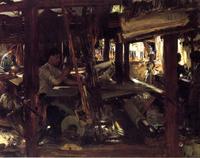
Granada. The Weavers
John Singer Sargent
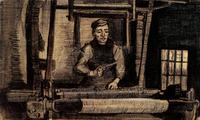
Weaver
Vincent van Gogh
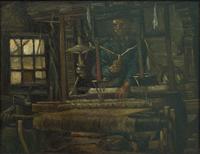
Weaver
Vincent van Gogh
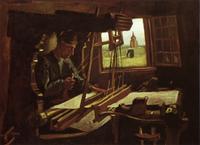
Weaver near an Open Window
Vincent van Gogh
Peasant weaving at war
M. H. Maxy
Figures in a cottage interior
Léon Augustin Lhermitte
Weaver, with a Baby in a Highchair
Vincent van Gogh
Weaver, Arranging Threads
Vincent van Gogh
La teixidora
Joan Planella i Rodríguez