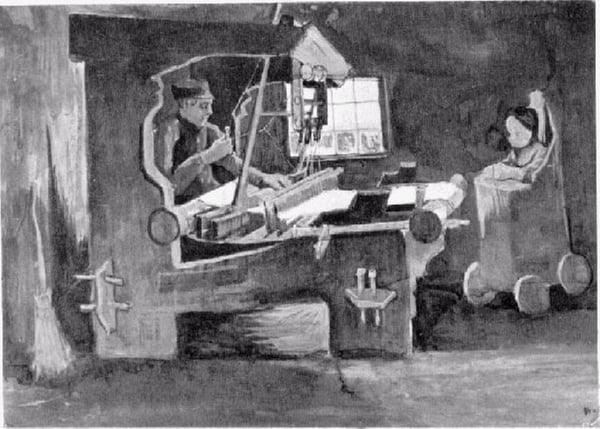
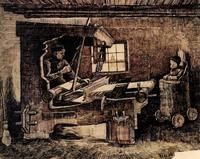
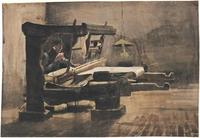
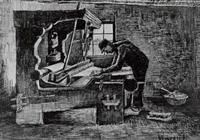
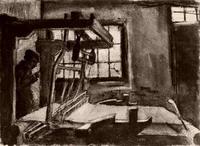
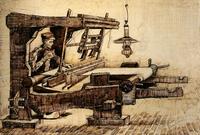
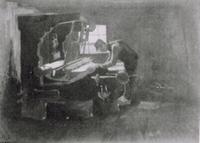
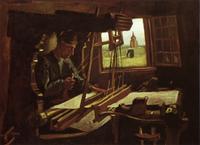
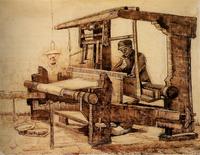
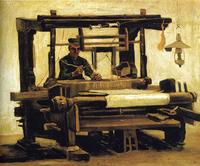
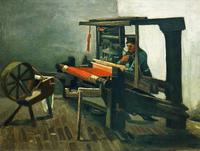
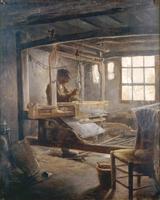
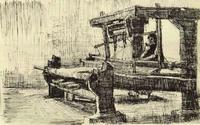
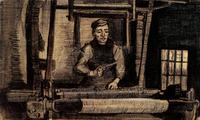
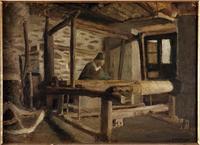
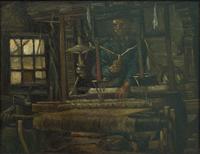
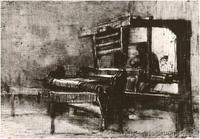
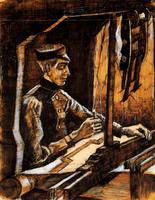
This artwork, Weaver Facing Right, Interior with One Window and High Chair (c. 1884), belongs to Vincent van Gogh’s early Dutch period, before he adopted the vivid color and expressive brushwork of his later Post-Impressionist style. Classified as Realism in both style and genre (sketch and study), it is significant for several reasons within that tradition:
-
Subject as Social Commentary: Van Gogh deliberately chose the weaver—a common laborer in the rural Netherlands—as a motif, reflecting the Realist commitment to depicting ordinary, working-class life with dignity. The interior setting, with its single window and high chair, emphasizes the humble, confined domestic workspace, a typical Realist concern with the realities of industrial or artisanal labor.
-
Study for Larger Works: As a sketch and study, this piece is not a finished painting but a preparatory exercise. It reveals van Gogh’s methodical, observational approach to Realism: he carefully rendered the loom, the figure’s posture, and the play of natural light from the window. Such studies were foundational for his later, more complex weaver compositions (e.g., The Weaver series), and they document his struggle to master perspective, anatomy, and tonal modulation within a strictly realist idiom.
-
Transitional Significance: Created during van Gogh’s time in Nuenen (the period of The Potato Eaters), this work shows his grappling with the dark, earthy palette and somber mood characteristic of Dutch Realism. The focus on the weaver’s back and the stark interior prefigures his lifelong empathy for the marginalized, even as his style would later explode into color and emotion.
In short, Weaver Facing Right exemplifies van Gogh’s early commitment to Realist principles—truth to everyday life, careful study from observation, and social engagement—before he revolutionized painting with his post-Impressionist vision. Its significance lies in tracing the roots of his artistic mission.