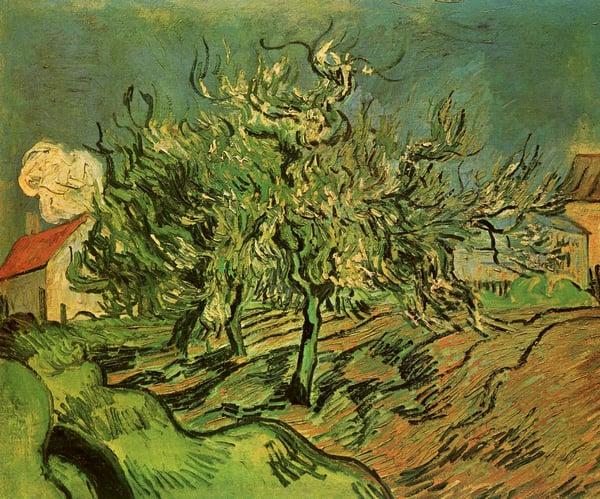
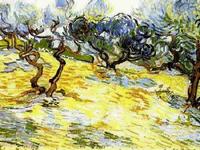
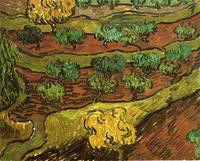
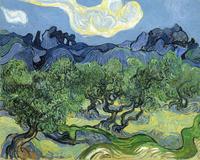
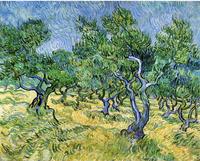
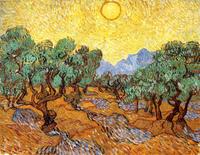
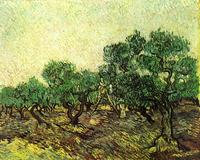
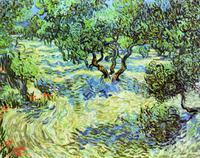
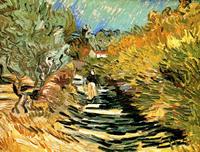
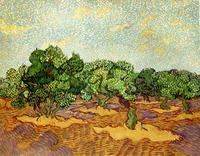
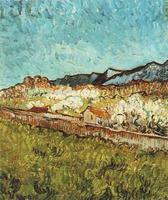
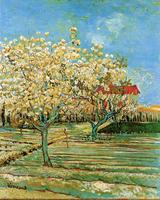
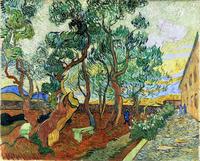
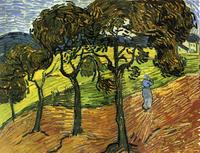
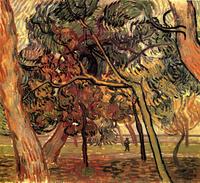
As a Post-Impressionist landscape by Vincent van Gogh, Landscape with Three Trees and a House holds significance through its embodiment of the movement’s core aims within the landscape genre. The work’s importance stems from its representation of Post-Impressionism’s departure from naturalistic depiction—a shift that is implicit in the style itself, as neither the artist nor the genre supplies details of specific visual elements. The painting’s focus on a simple rural scene (three trees and a house) aligns with the period’s interest in everyday subjects, while its status as a van Gogh work reinforces his role in pushing landscape beyond mere observation toward personal expression. However, without additional facts, the analysis must remain confined to these structural identifiers: the artwork is significant as a Post-Impressionist landscape that reflects the artist’s deliberate simplification and emotional resonance, hallmarks of the style that are not explicitly outlined here.