
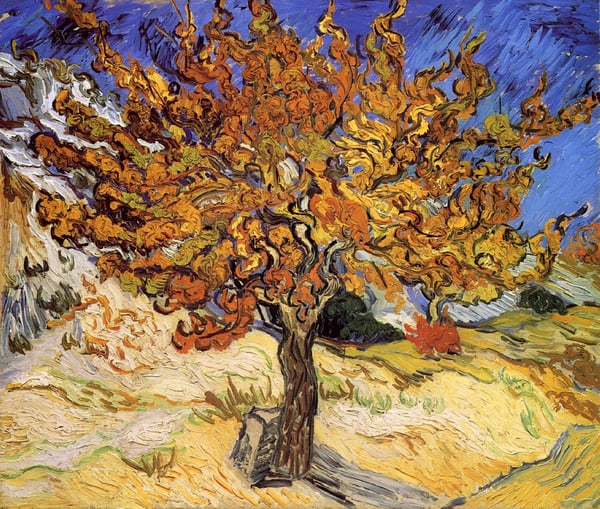
Analisi esperta di Mulberry Tree di Vincent van Gogh
Stile: Post-Impressionism · Genere: landscape
Expert Analysis: "Mulberry Tree" by Vincent van Gogh (Post-Impressionism)
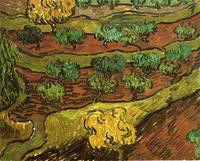
Vincent van Gogh’s Mulberry Tree (1889) stands as a quintessential example of Post-Impressionist landscape painting, demonstrating the artist’s radical departure from naturalistic representation in favor of emotional and symbolic expression. Painted during his voluntary stay at the Saint-Paul-de-Mausole asylum in Saint-Rémy-de-Provence, this work embodies the raw intensity and psychological depth that define van Gogh’s mature period.
Significance within Post-Impressionism:
Van Gogh’s Mulberry Tree exemplifies the Post-Impressionist drive to move beyond mere visual accuracy. Instead of rendering the tree with conventional perspective and local color, van Gogh uses thick, swirling brushstrokes (impasto) and a vivid, almost unnatural palette. The foliage is a riot of fiery oranges, deep yellows, and greens, set against a turbulent sky of blue and white. This chromatic intensity is not arbitrary—it conveys the artist’s emotional response to nature, transforming a simple orchard subject into a vision of dynamic, almost cosmic energy. The tree’s contorted, winding branches seem to pulse with life, reflecting van Gogh’s belief that nature possessed a spiritual force that could be channeled through paint.
Artistic Innovation:
The painting’s most striking feature is its texture. Van Gogh applied paint so thickly that the canvas becomes a sculptural surface, with each stroke retaining the energy of its application. This technique—often described as “drawing with paint”—makes the viewer acutely aware of the artist’s hand and his agitated state of mind. The swirling patterns in both the tree and the sky create a rhythmic visual movement that anchors the composition, while the isolated, solitary tree in a field evokes themes of endurance and resilience—perhaps mirroring van Gogh’s own struggle with mental illness.
Context and Legacy:
Painted in October 1889, just months before van Gogh’s death, Mulberry Tree belongs to a series of orchard landscapes he produced at Saint-Rémy. Unlike his earlier, more serene works from Arles, this painting captures a heightened, almost hallucinatory vision. The mulberry tree itself was located in the asylum’s garden; van Gogh wrote to his brother Theo that he was “quite absorbed in the study of the autumnal effects”—a study that resulted in one of his most emotionally charged landscapes.
Today, Mulberry Tree is celebrated not only for its technical mastery but for its raw, unfiltered expression of feeling—a hallmark of van Gogh’s genius and a cornerstone of Post-Impressionism. It bridges the gap between Impressionism’s fascination with light and the expressive abstraction of 20th-century movements, securing van Gogh’s place as a pioneer of modern art.
Museum / Gallery
Visivamente simili
20 opere con composizione e palette affini
Landscape with Three Trees and a House
Vincent van Gogh
Field with Two Rabbits
Vincent van Gogh
The Alpilles with Olive Trees in the Foreground
Vincent van Gogh
Olive Trees Bright Blue Sky
Vincent van Gogh
Landscape with Trees and Figures
Vincent van Gogh
Study of Pine Trees
Vincent van Gogh
Entrance to a Quarry
Vincent van Gogh
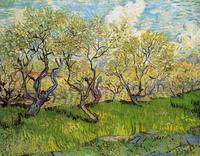
Orchard in Blossom
Vincent van Gogh
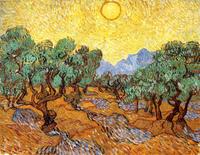
Olive Trees with Yellow Sky and Sun
Vincent van Gogh
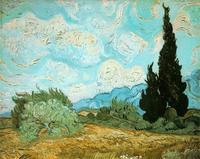
Wheat Field with Cypresses
Vincent van Gogh
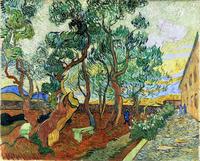
The Garden of St. Paul's Hospital at St. Remy
Vincent van Gogh
Two Poplars on a Hill
Vincent van Gogh
Olive Grove
Vincent van Gogh
Olive Grove - Bright Blue Sky
Vincent van Gogh
A Meadow in the Mountains: Le Mas de Saint-Paul
Vincent van Gogh
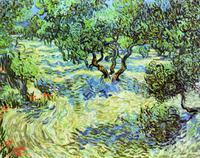
Olive Grove - Bright Blue Sky
Vincent van Gogh
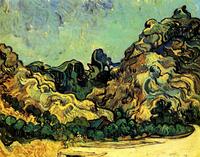
Mountains at Saint-Remy with Dark Cottage
Vincent van Gogh
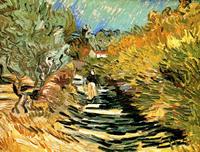
A Road in St. Remy with Female Figures
Vincent van Gogh
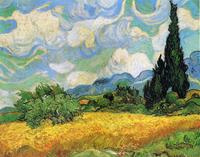
Wheat Field with Cypresses at the Haude Galline near Eygalieres
Vincent van Gogh
Olive Trees against a Slope of a Hill
Vincent van Gogh