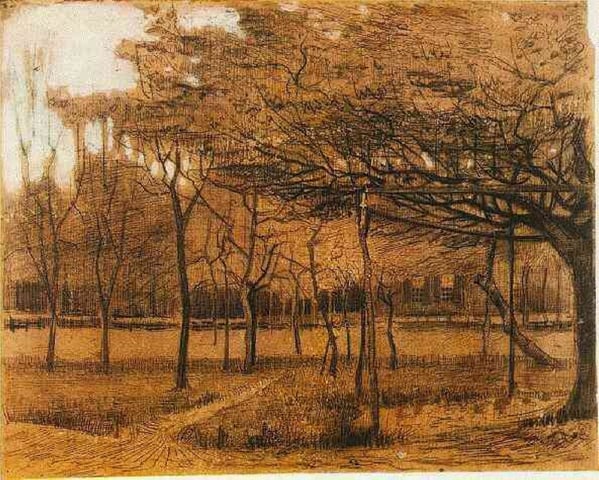
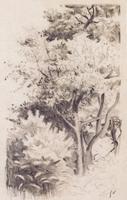
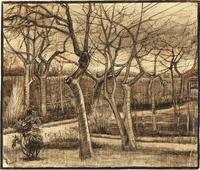
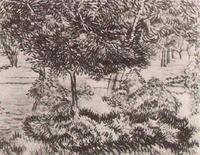
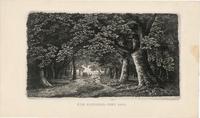
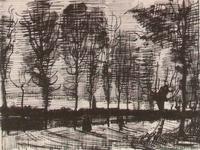
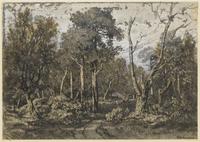
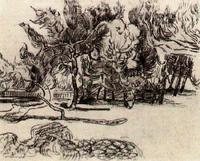
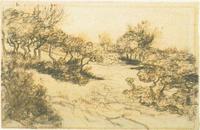
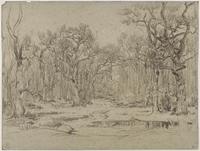
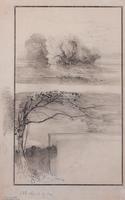
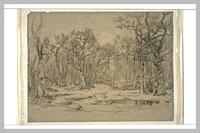
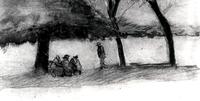
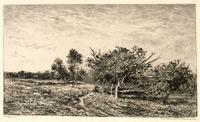
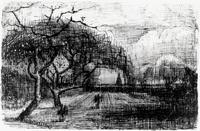
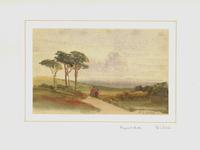
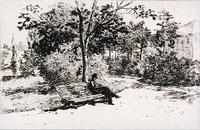
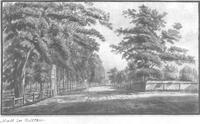
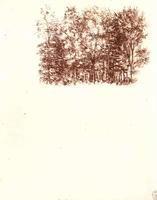
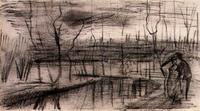
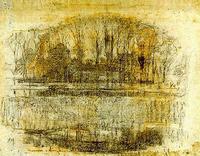
This landscape by Vincent van Gogh, rendered in a Realist style, is significant for its commitment to the core tenets of the movement within the landscape genre. Rather than idealizing nature or infusing it with symbolic or emotional exaggeration, the work focuses on a direct, unembellished observation of the natural scene—specifically, a grouping of trees in a rural setting. The significance lies in its demonstration of Realism’s dedication to depicting the ordinary, everyday world with fidelity, capturing the specific light, texture, and structure of the trees and their surroundings. While van Gogh would later become famous for a highly expressive, Post-Impressionist manner, this piece stands as a valuable example of his early grounding in the truth-to-nature principles that defined Realist landscape painting.