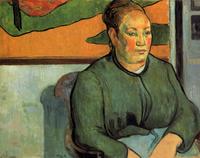
Expert Analysis: "L'Arlesienne, Portrait of Madame Ginoux" by Vincent van Gogh
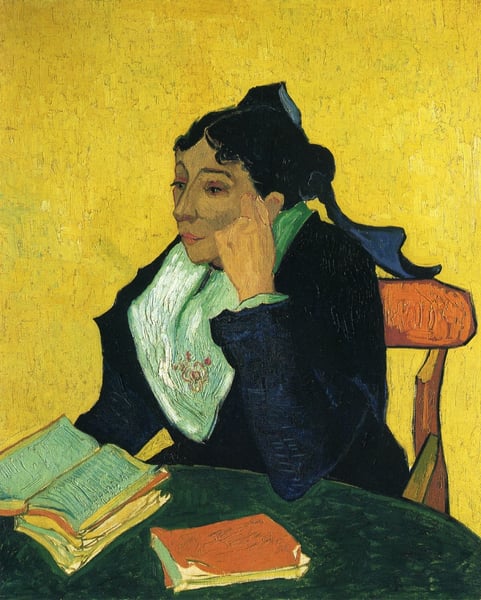
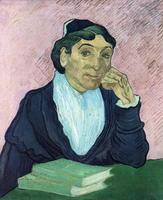
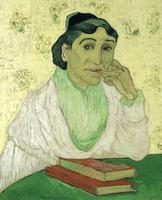
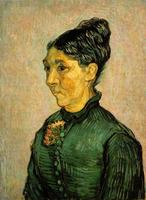
As a defining work of Post-Impressionism, this portrait exemplifies the movement’s radical departure from naturalistic representation in favor of emotional resonance and formal innovation. Van Gogh’s portrayal of Madame Ginoux is significant not merely as a likeness, but as a study in psychological depth conveyed through color and brushwork.
The subject is rendered with the artist’s signature rhythmic strokes, which transform the canvas into a vibrating field of energy. Van Gogh eschews conventional modeling for bold, clashing hues—yellows, blues, and greens—that heighten the sitter’s quiet melancholy. The face, simplified yet intensely expressive, reflects Post-Impressionism’s emphasis on subjective experience over objective reality.
Within the genre of portraiture, Van Gogh elevates a local Arlésienne (a woman from Arles) into an iconic figure. The work’s significance lies in its fusion of symbolic color and textured line to evoke inner life, foreshadowing Expressionism. It stands as a testament to Van Gogh’s ability to imbue a seemingly ordinary subject with timeless, universal emotion—a hallmark of his mature Post-Impressionist style.