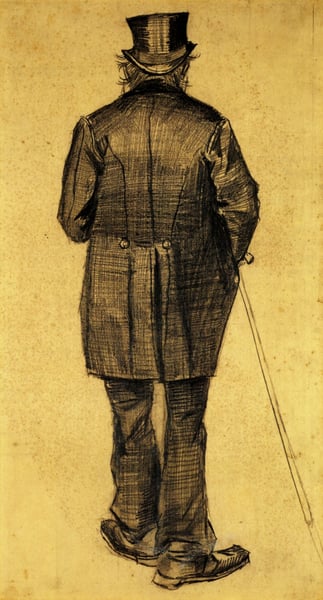
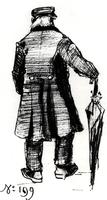
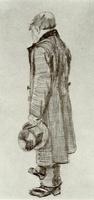
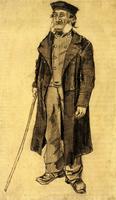
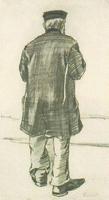
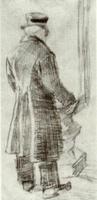
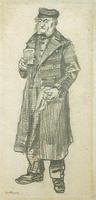
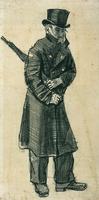
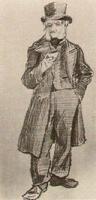
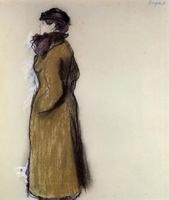
In this Realist portrait, Vincent van Gogh’s Old Man in a Tail-coat demonstrates the artist’s early commitment to unidealized, factual representation—a hallmark of the Realist movement. The work’s significance lies in its straightforward depiction of an elderly subject dressed in formal attire, a choice that invites contemplation of social status, age, and human dignity without romantic embellishment. By anchoring the portrait in the mundane details of the sitter’s appearance and costume, van Gogh aligns with Realism’s core mission to portray everyday life and ordinary people with honesty and gravity. This piece thus stands as an important example of van Gogh’s foundational training in the Realist tradition, capturing the psychological presence of the sitter through careful observation and restraint.