
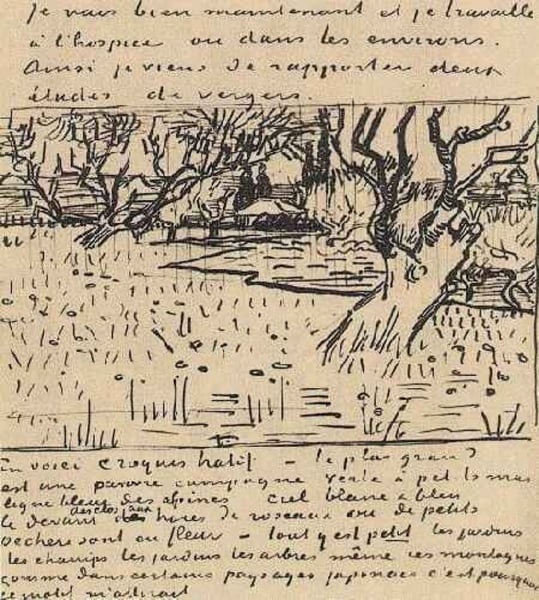
Orchard in Bloom with View of Arles
Details
Expert analysis of Vincent van Gogh’s Orchard in Bloom with View of Arles
Style: Post-Impressionism · Genre: sketch and study
Expert Analysis: "Orchard in Bloom with View of Arles" by Vincent van Gogh
As a Post-Impressionist sketch and study, this work holds a distinctive place in van Gogh’s artistic evolution. While many of his finished paintings burst with thick impasto and swirling brushwork, this piece belongs to the preparatory phase of his celebrated orchard series—painted during his first spring in Arles in 1888. Its significance lies in its function as a working document of his creative process.
Within the Post-Impressionist context, van Gogh was moving beyond Impressionism’s fleeting optical effects toward a more symbolic, emotionally charged use of color and line. This study reveals how he tested compositional balance and chromatic relationships before committing to a final canvas. The inclusion of “View of Arles” in the title indicates his intent to embed the blossoming orchard within its larger Provençal landscape—a deliberate juxtaposition of transient natural beauty and the enduring human settlement.
What makes this work significant as a sketch and study is its documentation of van Gogh’s working method. The rapid, abbreviated strokes and areas of exposed ground suggest an on-location notation—capturing the shifting shadows, the direction of blossom clusters, and the rhythm of the trees. The sketchy quality preserves the immediacy of his visual perception, a hallmark of his belief that drawing is the foundation of painting. This work also foreshadows his later, more structured series of flowering orchards, where he would amplify color contrasts (e.g., pink blossoms against a blue sky) to evoke spiritual renewal and hope.
In the broader Post-Impressionist narrative, such studies underscore the movement’s emphasis on personal expression over objective representation. Van Gogh’s sketch is not a dry draft but a charged, intimate record of his emotional response to nature—a precursor to the expressive distortions that would define his mature style. It stands as a vital link between his Dutch realist roots and the vivid, symbolist intensity of his Arlésien masterpieces.
Museum / Gallery
Visually similar
20 works with related composition and palette
Farmhouse with Wheat Field along a Road and Field with Flowers
Vincent van Gogh
Daubigny's Garden with Black Cat
Vincent van Gogh
Pollard Willow
Vincent van Gogh
Public Garden with a Couple and a Blue Fir Tree
Vincent van Gogh
Road with Men Walking, Carriage, Cypress, Star, and Crescent Moon
Vincent van Gogh
Enclosed Field with Ploughman
Vincent van Gogh
Sower and Trunk of an Old Yew Tree
Vincent van Gogh
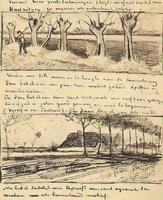
Road with Pollard Willows
Vincent van Gogh
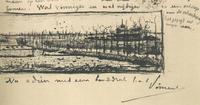
The Schenkweg
Vincent van Gogh
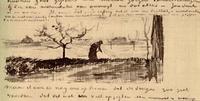
Stooping Woman in Landscape
Vincent van Gogh
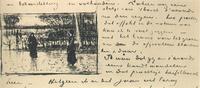
Woody Landscape After the Rain
Vincent van Gogh
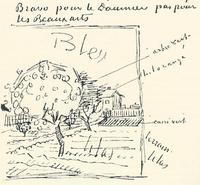
Orchard and House with Orange Roof
Vincent van Gogh
A Bare Treetop in the Garden of the Asylum
Vincent van Gogh
A Weather-Beaten Pine Tree
Vincent van Gogh
La Crau with Peach Trees in Bloom
Vincent van Gogh
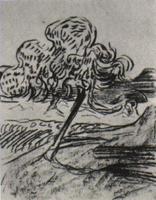
Study of a Fruit Tree
Vincent van Gogh
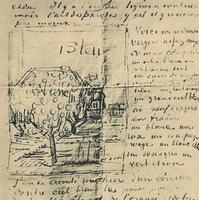
Orchard and House with Orange Roof
Vincent van Gogh
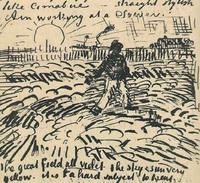
Sower with Setting Sun
Vincent van Gogh
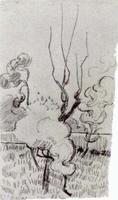
Pine Trees near the Wall of the Asylum
Vincent van Gogh
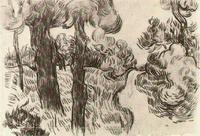
Path between Pine Trees
Vincent van Gogh