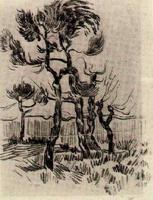
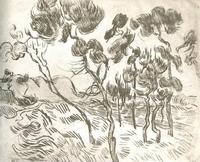
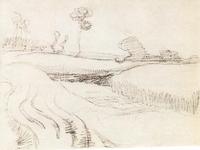
Expert Analysis: "Pine Trees near the Wall of the Asylum" by Vincent van Gogh
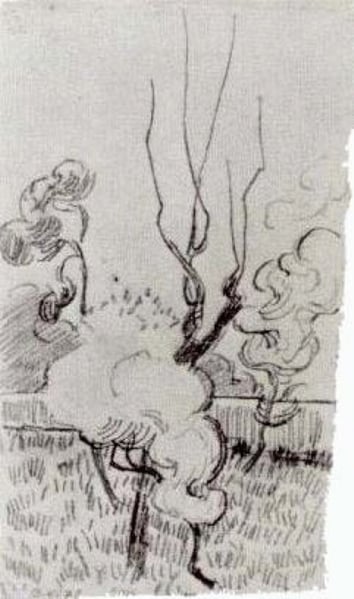
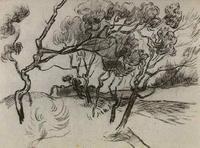
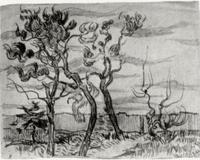
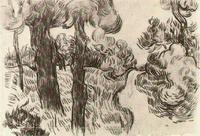
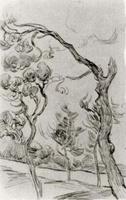
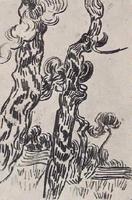
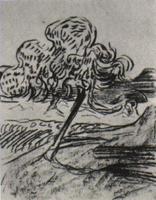
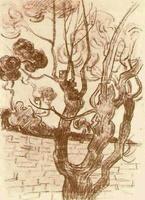
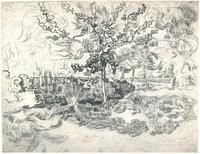
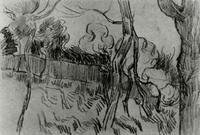
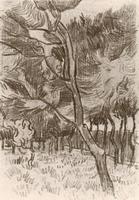
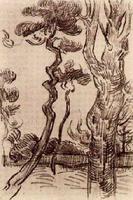
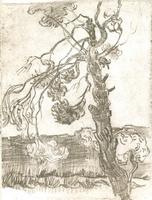
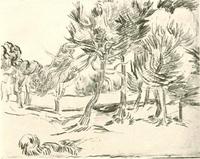
As a sketch and study executed in the Post-Impressionist style, this work holds its significance in its raw, unpolished immediacy. Unlike van Gogh's finished canvases, the sketch and study genre allows us to witness the artist's direct, spontaneous response to his subject. The title anchors the scene to a specific, charged location—the wall of the asylum—which, within the context of Post-Impressionism, transforms a simple landscape into a vehicle for subjective expression. The pine trees are not merely botanical studies; their proximity to the asylum wall suggests a dialogue between confinement and the turbulent, living energy of nature. The very roughness of a sketch, with its visible lines and rapid marks, embodies Post-Impressionism's departure from objective representation in favor of psychological and emotional intensity. Here, van Gogh’s hand reveals the agitation and fervor that would become hallmarks of the movement, making this study a vital document of how subjective vision is first captured on paper. Its significance lies in its unguarded glimpse into the creative process of a master who channeled raw feeling into every mark.