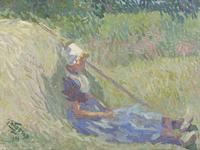
Expert Analysis: "Sheaf-Binder, The after Millet" by Vincent van Gogh
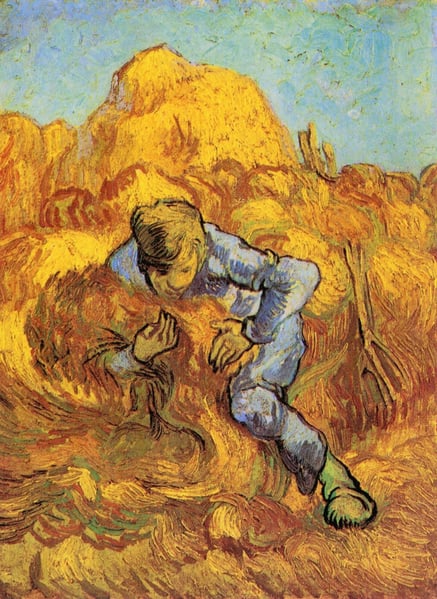
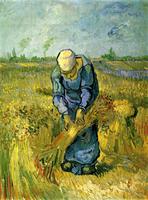
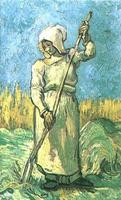
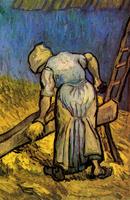
This work is a compelling example of Vincent van Gogh’s engagement with the rural, labor-themed compositions of Jean-François Millet, whom he deeply admired. As a Post-Impressionist reinterpretation, van Gogh transforms Millet’s earlier, more naturalistic depiction of a peasant working the harvest into an intensely personal and expressive statement.
The painting’s significance lies in how van Gogh uses the genre painting format—a scene of everyday rural life—to explore the emotional and spiritual dimensions of manual labor. Rather than simply copying Millet, van Gogh amplifies the scene through his signature dynamic brushwork, heightened color contrasts, and bold contours. The sheaf-binder is not merely a figure in a field; she becomes a symbol of resilience, dignity, and the cyclical nature of life and work.
Within the Post-Impressionist movement, this piece exemplifies van Gogh’s radical departure from optical realism. His thick, rhythmic strokes and vibrant palette (even when working from a monochromatic source) inject the humble subject with a visceral energy that borders on the transcendental. The painting stands as a testament to van Gogh’s ability to fuse the traditional peasant motif with his own turbulent, visionary style—making the ordinary extraordinary and affirming the artist’s belief that even the simplest act of binding sheaves could carry profound, universal meaning.