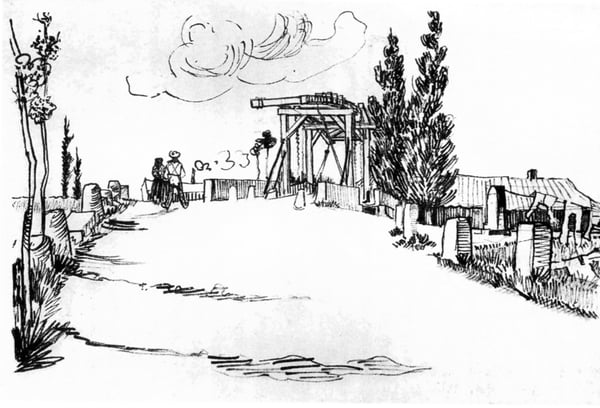
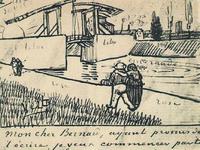
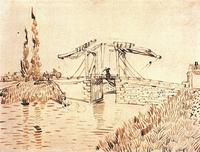
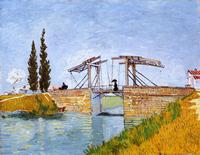
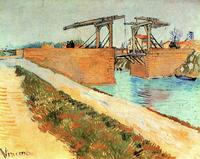
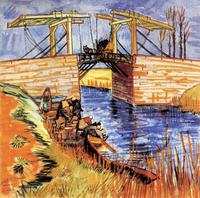
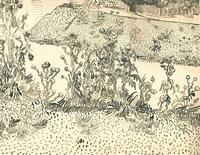
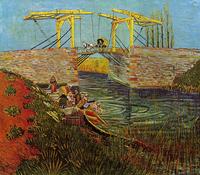
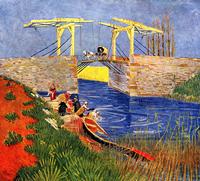
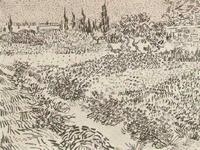
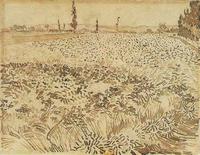
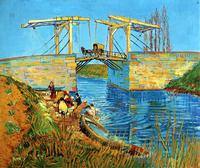
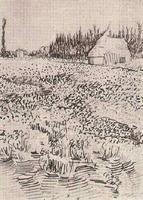
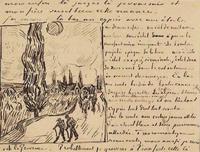
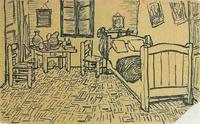
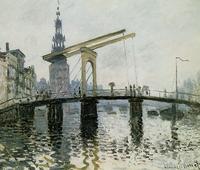
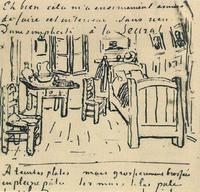
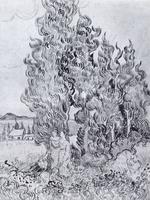
As a sketch and study within the Post-Impressionist movement, "The Langlois Bridge at Arles" by Vincent van Gogh is significant primarily for its role in revealing the artist’s working method and preparatory process. This genre—a sketch and study—documents van Gogh’s direct observation of the subject, capturing the essential geometry and atmosphere of the scene before it was translated into more finished paintings. Within the context of Post-Impressionism, such studies highlight the artist’s emphasis on personal expression, structure, and the emotional resonance of everyday landscapes, marking a departure from the purely optical concerns of Impressionism. The work thus stands as a vital record of van Gogh’s compositional thinking and his systematic exploration of form and color that would define his mature oeuvre.