
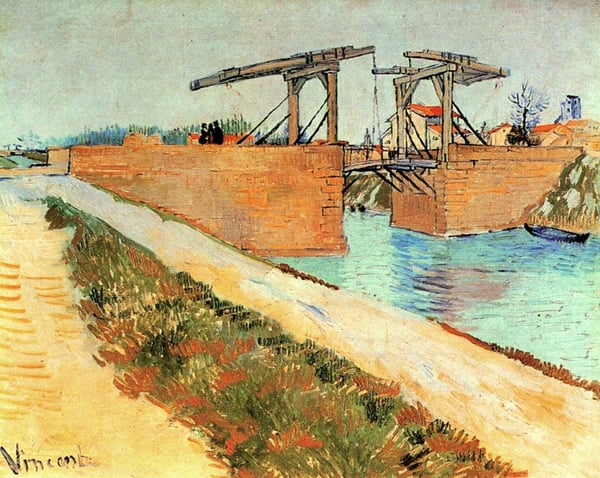
The Langlois Bridge at Arles with Road Alongside the Canal
詳細
Vincent van Gogh の The Langlois Bridge at Arles with Road Alongside the Canal の専門的な分析
スタイル:Japonism · ジャンル:landscape
Expert Analysis: "The Langlois Bridge at Arles with Road Alongside the Canal" by Vincent van Gogh
This work stands as a pivotal example of van Gogh’s embrace of Japonism—the European fascination with Japanese ukiyo-e woodblock prints—and his reinvention of the landscape genre. Painted during his transformative stay in Arles, the scene depicts the modest drawbridge that became a repeated motif in his oeuvre, yet it is the treatment—not the subject—that reveals its significance.
Significance within Japonism and Landscape:
Van Gogh deliberately flattens pictorial space, rejecting Western linear perspective in favor of a shallow, decorative plane reminiscent of Japanese prints. The canal and road rise steeply toward the top edge, compressing depth, while the bridge’s structure is reduced to clean, intersecting diagonals. Bold, unmodulated outlines—a hallmark of ukiyo-e—define every element: the bridge’s wooden beams, the willow trees, the grassy banks, and the distant cottages.
Color is equally influenced by Japanese woodcuts. Van Gogh employs stark complementary contrasts—ochre against violet-blue, emerald green against orange-red—to heighten visual intensity without naturalistic blending. The water’s surface is treated as a patterned field of short, parallel strokes rather than a reflective mirror, echoing the graphic flatness of Hokusai or Hiroshige.
The composition itself borrows asymmetrical balance from Japanese art: the bridge is pushed slightly off-center, while a tall tree trunk on the left acts as a repoussoir, framing the scene and leading the eye in a serpentine curve along the canal. This dynamic, cropped framing gives the ordinary rural bridge a sense of quiet monumentality, transforming a functional structure into a meditative, almost decorative landscape.
Why It Matters:
In this painting, van Gogh synthesizes his admiration for Japanese aesthetics with his own distinctive brushwork—thick, rhythmic impasto that adds a tactile, emotional pulse absent from the pristine prints he so admired. The result is not mere imitation but a novel dialogue between Eastern compositional clarity and Western expressive texture. It marks a crucial step in van Gogh’s journey toward a personal, post-impressionist language, where landscape becomes a vehicle for psychological and formal experimentation. The Langlois Bridge series, of which this is a key example, demonstrates how deeply Japonism catalyzed his mature style, proving that for van Gogh, “all my work is based to some extent on Japanese art.”
Museum / Gallery
視覚的に類似
構図やパレットが近い作品 20 件
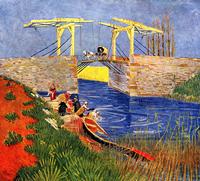
The Langlois Bridge at Arles with Women Washing
Vincent van Gogh
The Langlois Bridge at Arles
Vincent van Gogh
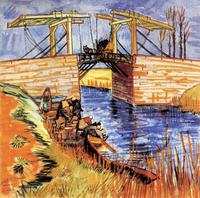
The Langlois Bridge at Arles
Vincent van Gogh
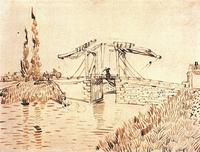
Drawbridge with Lady with Parasol
Vincent van Gogh
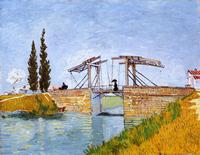
The Langlois Bridge
Vincent van Gogh
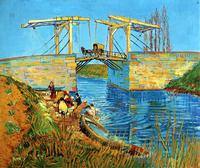
The Langlois Bridge at Arles with Women Washing
Vincent van Gogh
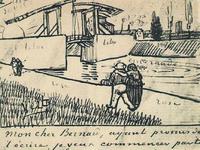
Drawbridge with Walking Couple
Vincent van Gogh
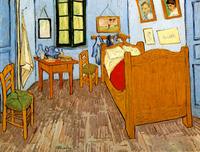
Vincent's Bedroom in Arles
Vincent van Gogh
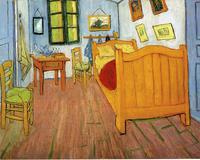
Vincent's Bedroom in Arles
Vincent van Gogh
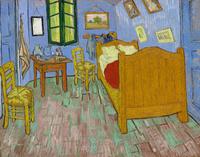
Vincent's Bedroom in Arles
Vincent van Gogh
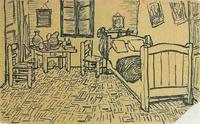
Vincent's Bedroom in Arles
Vincent van Gogh
Thistles Along the Roadside
Vincent van Gogh
Self Portrait with Bandaged Ear
Vincent van Gogh
The Bridge, Amsterdam
Claude Monet
Self Portrait with Pallette
Vincent van Gogh
Self-Portrait
Vincent van Gogh
Self-Portrait
Vincent van Gogh
Self Portrait with Felt Hat
Vincent van Gogh
Self-Portrait with Straw Hat
Vincent van Gogh
Vincent's Bedroom
Vincent van Gogh