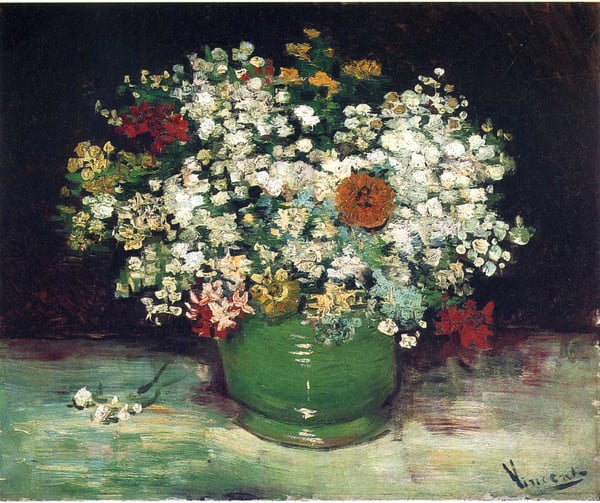
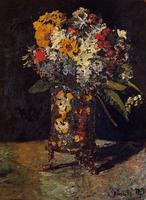
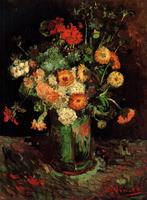
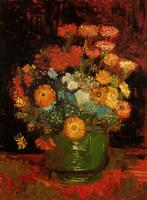
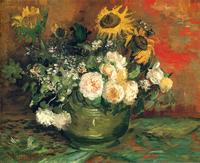
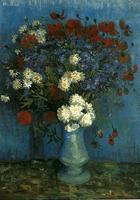
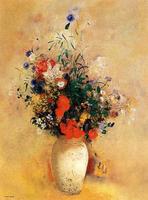
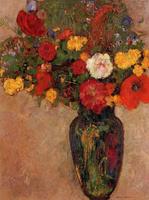
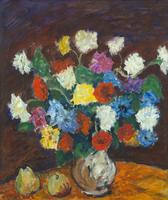
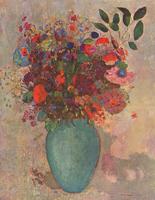
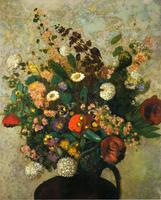
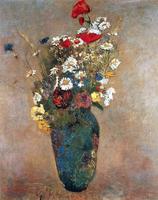
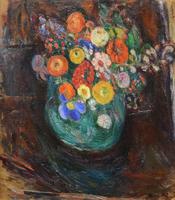
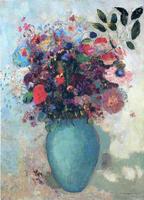
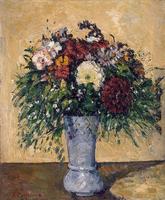
The artwork "Vase with Zinnias and Other Flowers" by Vincent van Gogh is a flower painting executed in a Realist style. While van Gogh is best known for his Post-Impressionist works, this piece belongs to his earlier, more naturalistic period, reflecting the influence of Dutch Realist still-life traditions.
Significance within Realism and its period:
- Mastery of observation and texture: The painting demonstrates van Gogh’s acute attention to botanical detail—the varying petals of zinnias, the soft velvet of other blooms, and the interplay of light on the vase—all rendered with a disciplined, naturalistic hand that aligns with Realism’s commitment to depicting the visible world without idealization.
- Bridging tradition and personal expression: Even within this cautious Realist framework, van Gogh’s emerging sensitivity to color and brushwork is evident. The subtle vibrancy of the reds, oranges, and purples hints at the emotional intensity that would later define his Post-Impressionist palette, marking a transitional moment where objective representation began to yield to subjective sensation.
- Revitalization of the still-life genre: In an era when flower painting was often dismissed as decorative, van Gogh approached the subject with scholarly seriousness, elevating humble garden flowers to a level of psychological presence. The careful arrangement and intense observation give the bouquet a quiet monumentality, typical of Realist attempts to find dignity in everyday subjects.
- Contrast with his later work: This painting is significant precisely because it shows van Gogh grounding himself in Realist discipline before breaking free. It reveals that his iconic expressive style was built on a solid foundation of visual literacy, making his subsequent innovations even more remarkable.
Thus, "Vase with Zinnias and Other Flowers" stands as a testament to van Gogh’s ability to work within the Realist tradition while already planting the seeds of his own revolutionary vision.