
Expert analysis of Vincent van Gogh’s Vegetable Gardens in Montmartre
Style: Post-Impressionism · Genre: landscape
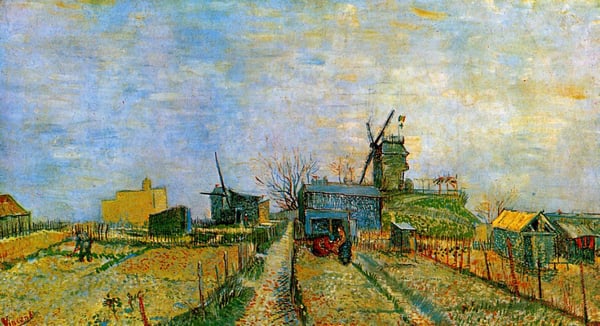
An expert analysis of Vincent van Gogh’s Vegetable Gardens in Montmartre must begin with its place in his pivotal Paris period (1886–1888). Executed just before he left for Arles, this landscape exemplifies the artist’s shift from the somber tones of his Dutch years toward the vibrant, expressive color and dynamic brushwork that define Post-Impressionism.
Composition and Subject:
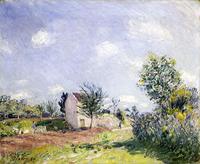
Van Gogh depicts the working gardens on the slopes of Montmartre, then still a semi-rural suburb of Paris. The scene is unremarkable—rows of vegetables, a fence, a few buildings—but his treatment transforms the ordinary into a vibrant, almost vibrating surface. The high vantage point allows a sweeping view, while the diagonal lines of the garden plots lead the eye through layers of green, yellow, and blue.
Color and Technique:
The painting is significant for its bold, unblended strokes—short dashes and swirling ribbons of paint that build texture and energy. Warm ochres and greens dominate the foreground, while the sky is built from streaks of pale blue and white. This is not mere observation; van Gogh is already using color to convey emotion and vitality, a hallmark of Post-Impressionism. The influence of Impressionism is present in the outdoor light, but van Gogh pushes beyond capturing momentary effects. He imbues the humble vegetable plots with a rhythmic, almost spiritual life.
Historical Significance:
Within van Gogh’s oeuvre, this work marks a critical transition. It shows him absorbing the lessons of Georges Seurat’s pointillism (visible in the broken touches of color) while forging his own expressive shorthand. The subject—a working-class plot of land rather than fashionable boulevards—reflects his sympathy for the simple and the overlooked. In the broader context of Post-Impressionism, Vegetable Gardens in Montmartre demonstrates how landscape could become a vehicle for personal, emotional expression, paving the way for the ecstatic landscapes of his final years. Its significance lies in its quiet confidence: a master finding his voice in the dirt and light of a hillside garden.
Museum / Gallery
Visually similar
20 works with related composition and palette
Vegetable Gardens in Montmartre
Vincent van Gogh
The Allotments at Montmartre
Vincent van Gogh
Le Moulin de la Gallette
Vincent van Gogh
Country house
Henri Martin
Walnut trees at sunset in early October
Alfred Sisley
The Restaurant de la Sirene at Asnieres
Vincent van Gogh
The Mill of Blute End
Vincent van Gogh
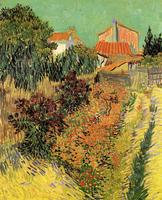
Garden Behind a House
Vincent van Gogh
Morning Sun, Saint Mammes
Alfred Sisley
The Loing at Moret
Alfred Sisley
Peach Trees in Blossom
Vincent van Gogh
Rue Caulaincourt. Mills on Montmarte
Paul Signac
Walnut Trees, Sunset Early Days of October
Alfred Sisley
Le Moulin de la Gallette 3
Vincent van Gogh
Farmhouses in a Wheat Field Near Arles
Vincent van Gogh
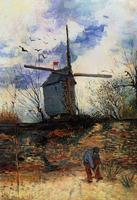
Moulin de la Galette
Vincent van Gogh
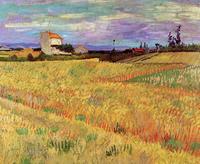
Wheat Field
Vincent van Gogh
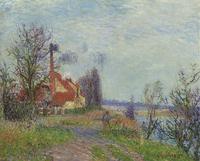
Paper Mill at Port Marly
Gustave Loiseau
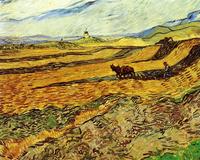
Field and Ploughman and Mill
Vincent van Gogh
Springtime
Alfred Sisley