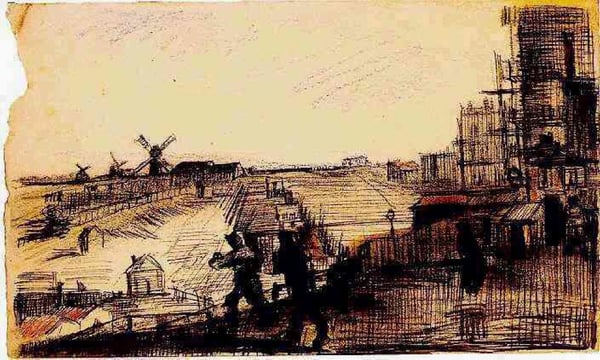
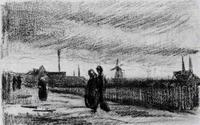
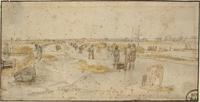
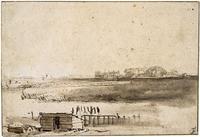
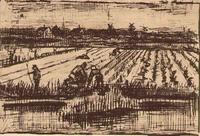
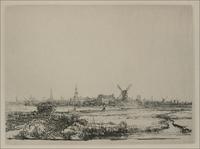
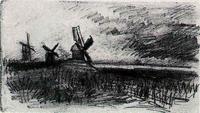
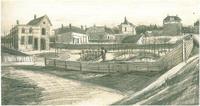
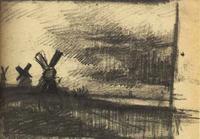
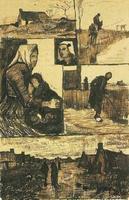
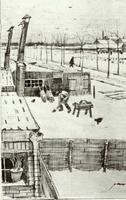
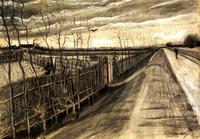
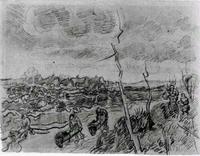
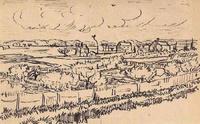
This cityscape by Vincent van Gogh, a leading figure of Post-Impressionism, captures the suburban hills of Montmartre with the artist’s characteristic expressive energy. Although the composition is grounded in a recognizable urban view—a common genre of the period—van Gogh transforms it through his signature use of thick, directional brushstrokes and vivid, often unnaturalistic color.
Within the Post-Impressionist movement, the work stands as a departure from the fleeting optical effects of Impressionism; instead, it emphasizes emotional resonance and structural rhythm. The view becomes less about documenting a place and more about conveying a personal, almost tactile experience of the landscape. This fusion of a modern urban subject with bold, subjective technique exemplifies how van Gogh pushed the genre of cityscape beyond topographical record into a vehicle for psychological and aesthetic intensity, marking a significant shift toward early modernist expression.