
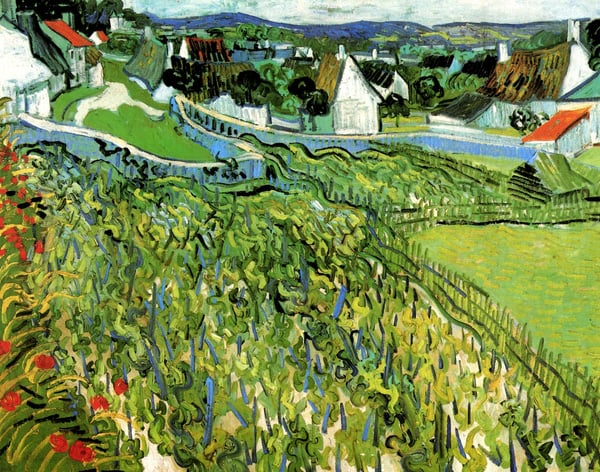
Vineyards with a View of Auvers
Details
Expert analysis of Vincent van Gogh’s Vineyards with a View of Auvers
Style: Post-Impressionism · Genre: landscape
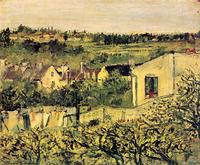
The artwork "Vineyards with a View of Auvers" by Vincent van Gogh is a striking example of Post-Impressionist landscape painting that captures the artist’s mature style during his final, intensely productive months in Auvers-sur-Oise.
Significance within Post-Impressionism:
Van Gogh’s work epitomizes the Post-Impressionist break from naturalism, emphasizing subjective emotion and symbolic meaning over literal representation. This painting demonstrates his signature use of expressive, rhythmic brushstrokes and vibrant, non-naturalistic color to convey the emotional resonance of the scene. The vine rows and rolling hills are rendered with a dynamic, almost tactile energy, transforming a simple rural view into a meditation on vitality and transience.
Context of the Auvers Period:
Created in the summer of 1890, shortly before his death, this piece belongs to van Gogh’s Auvers series—a body of work noted for its heightened psychological intensity and bold experimentation. Here, the juxtaposition of the orderly vineyards against the distant village of Auvers (with its recognizable church spire) reflects his ongoing fascination with the harmony between human cultivation and nature’s wildness.
Artistic Techniques:
- Color: Van Gogh employs complementary hues—deep purples, greens, and yellows—to create a sense of luminosity and tension. The sky and fields pulse with chromatic contrasts that evoke both the heat of harvest and a poignant, almost restless beauty.
- Brushwork: Thick, directional strokes (impasto) define the vine rows, leading the eye toward the horizon. This tactile application of paint imbues the scene with a sense of movement and immediacy, characteristic of his late work.
- Composition: The sweeping diagonal of the vineyard draws the viewer into the space, while the village sits as a stable, distant anchor—a subtle reminder of human presence within the expansive landscape.
Legacy:
"Vineyards with a View of Auvers" exemplifies how Post-Impressionism reimagined landscape not as a passive record of nature, but as a vehicle for personal expression. Van Gogh’s ability to distill rural Auvers into a realm of intense color and raw emotion makes this painting a poignant testament to his revolutionary vision.
Museum / Gallery
Visually similar
20 works with related composition and palette
Houses in Auvers
Vincent van Gogh
A Group of Cottages
Vincent van Gogh
Houses with Thatched Roofs, Cordeville
Vincent van Gogh
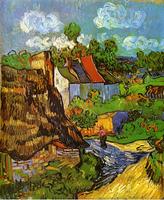
Houses in Auvers 2
Vincent van Gogh
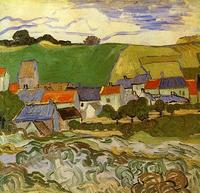
View of Auvers
Vincent van Gogh
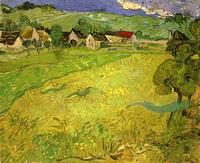
View of Vessenots near Auvers
Vincent van Gogh
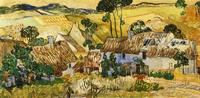
Thatched Houses against a Hill
Vincent van Gogh
The House of Pere Pilon
Vincent van Gogh
Village Street and Steps in Auvers with Figures
Vincent van Gogh
Thatched Cottages in the Sunshine Reminiscence of the North
Vincent van Gogh
Farmhouse with Two Figures
Vincent van Gogh
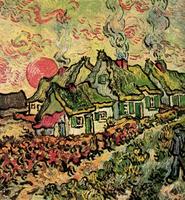
Cottages Reminiscence of the North
Vincent van Gogh
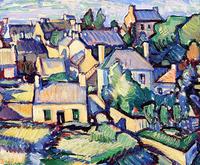
Ile de Bréhat
Samuel Peploe
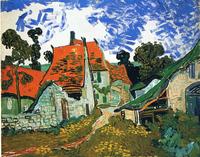
Street in Auvers-sur-Oise
Vincent van Gogh
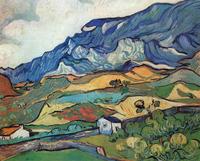
Les Alpilles, Mountain Landscape near South-Reme
Vincent van Gogh
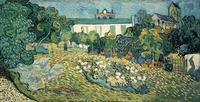
Daubigny's Garden
Vincent van Gogh
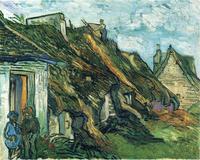
Thatched Sandstone Cottages in Chaponval
Vincent van Gogh
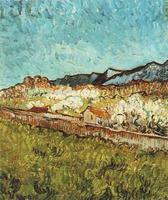
At the Foot of the Mountains
Vincent van Gogh
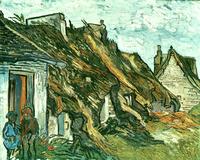
Thatched Cottages in Chaponval, Auvers-sur-Oise
Vincent van Gogh
La Butte Pinson
Maurice Utrillo