
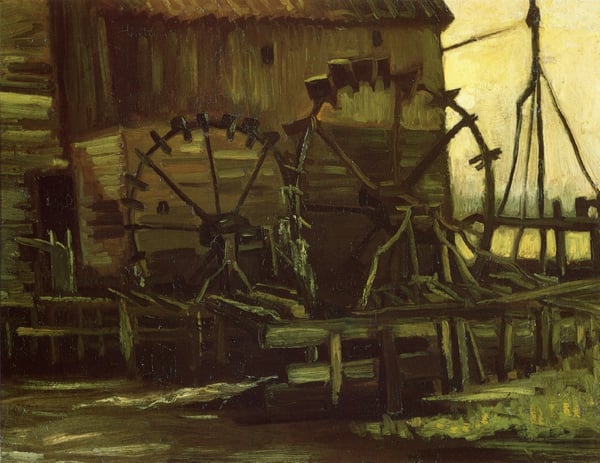
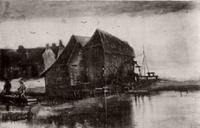
Water Wheels of Mill at Gennep
Dettagli
Analisi esperta di Water Wheels of Mill at Gennep di Vincent van Gogh
Stile: Realism · Genere: cityscape
Expert Analysis of "Water Wheels of Mill at Gennep" by Vincent van Gogh
Executed within the framework of Realism, this cityscape by Vincent van Gogh offers a rare glimpse into the artist’s early period before his signature expressive style emerged. The work’s significance lies in its disciplined adherence to the Realist principles of faithful, unidealized observation—a foundation that later underpinned his more radical Post-Impressionist experiments.
Composition and Subject: The painting depicts a functional water mill in the Dutch town of Gennep, with its massive wooden wheels as the focal point. Van Gogh renders the machinery, brickwork, and surrounding cottages with precise, unromantic detail, prioritizing accuracy over emotional distortion. The genre of cityscape here is not merely a backdrop but a record of rural-industrial life—a typical Realist concern with everyday, working-class environments.
Technique and Palette: Muted earth tones, subdued greens, and soft greys dominate the palette, avoiding the vivid, emotionally charged colors of his later works. Brushwork is controlled and descriptive, seeking to capture the texture of weathered wood, mossy stone, and flowing water. This technical restraint highlights van Gogh’s early mastery of observational painting, a skill he learned from the Dutch Realist tradition (e.g., the Hague School).
Significance Within Realism: As a transitional piece from van Gogh’s Nuenen period (1883–1885), the painting exemplifies how he grounded his nascent artistic voice in the Realist ethos of truth to life. It contrasts sharply with the turbulent, symbolic landscapes of his French period, making it a crucial document for understanding his artistic development. This work stands as a testament to the importance of Realist disciple in his evolution—a “before” picture essential to appreciating the “after” of his sunflowers and starry nights.
In sum, Water Wheels of Mill at Gennep is significant for its role as a cornerstone of van Gogh’s career, proving that even the most pioneering visionaries first learned to see and record the world as it truly is.
Museum / Gallery
Visivamente simili
20 opere con composizione e palette affini
A Watermill
James Campbell Noble
Młyn zimą
Ferdynand Ruszczyc
Landscape with Lake
Konstantin Makovsky
An old mill
Lev Lagorio
Watermill in Kollen, near Nuenen
Vincent van Gogh
The Ornans Paper Mill
Gustave Courbet
Forest Landscape with Watermill
Efim Volkov
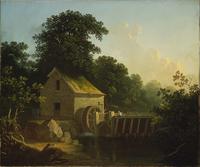
Landscape with Waterwheel and Boy Fishing
George Caleb Bingham
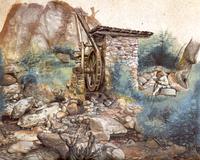
Watermill at the montaсa
Albrecht Durer

Silence of the Snow, Bucket Mill on the Feugh, Finzean
Joseph Farquharson
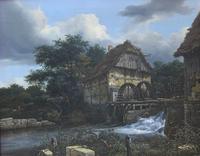
Two Watermills and an Open Sluice
Jacob van Ruisdael
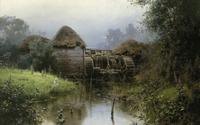
Old mill
Vasily Polenov
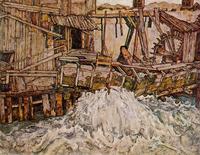
The Mill
Egon Schiele
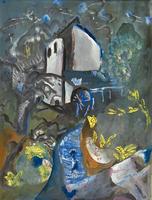
The Water Mill
Frances Hodgkins
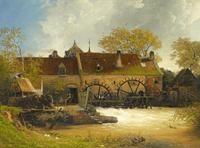
Water mill on the river
Andreas Achenbach
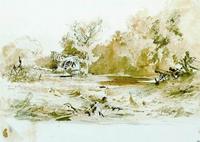
Abandoned Mill 2
Fyodor Vasilyev
A Mill at Gillingham in Dorset
John Constable
Вид на водоспад у Червоногруді, 1823 р.
Антон Лянґе
Watermill at Gennep
Vincent van Gogh
Two Undershot Watermills with Men Opening a Sluice
Jacob van Ruisdael