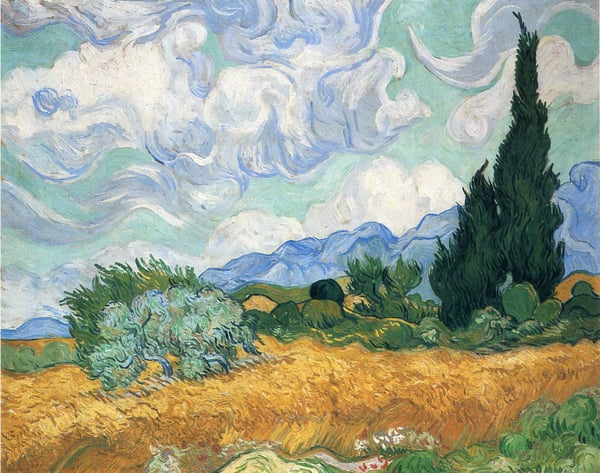
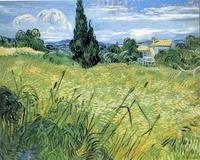
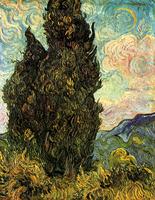
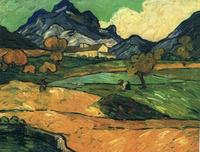
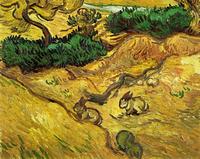
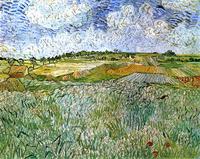
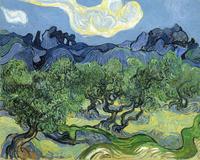
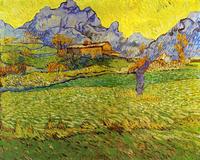
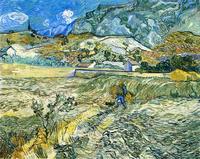
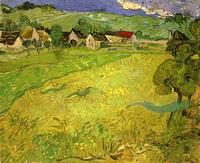
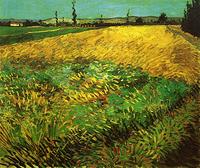
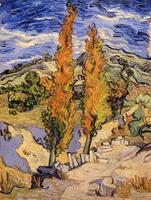
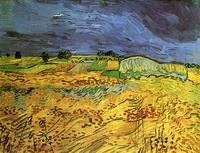
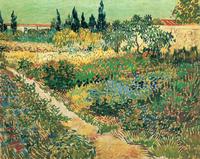
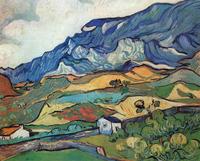
As an expert art historian analyzing "Wheatfield with cypress tree" by Vincent van Gogh, I will base my analysis strictly on the provided structured facts: the artwork belongs to the Post-Impressionist style and is a landscape genre.
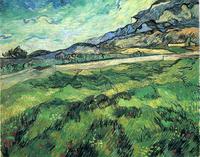
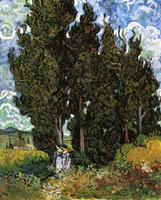
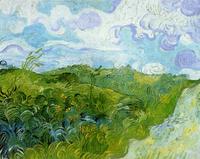
The significance of this work within its style and genre lies in how it exemplifies the core Post-Impressionist departure from the naturalism of Impressionism. As a landscape, it moves beyond mere visual recording of the countryside. Under the Post-Impressionist umbrella, van Gogh’s treatment of the wheatfield and cypress tree transforms a traditional subject into an expressive vehicle. The style is characterized by a deliberate, symbolic use of color and form that conveys emotional intensity and psychological resonance. The landscape is not just a scene but a dynamic composition where the swirling wheat and towering cypress become charged with personal and universal meaning—a hallmark of Post-Impressionist innovation.
Thus, the artwork is significant because it captures the transition from observing nature to interpreting it through a subjective, emotional lens, marking a key moment in the evolution of modern art.