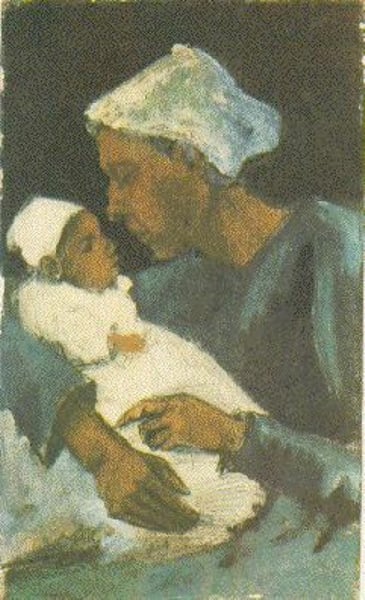
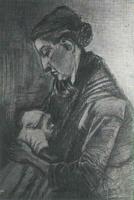
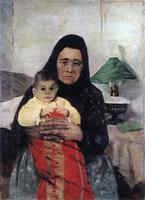
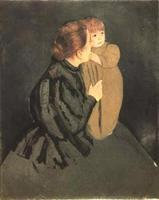
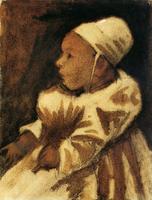
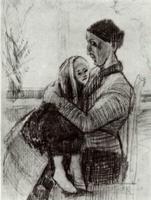
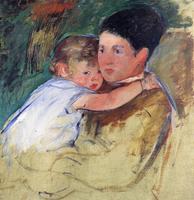
Expert Analysis: "Woman Sien with Baby on her Lap, Half-Figure" by Vincent van Gogh
Within the framework of Realism and the genre painting tradition, this work holds a quiet but crucial place in van Gogh's early evolution as an artist. Executed before his more famous Post-Impressionist period, the painting exemplifies the core Realist commitment to depicting unidealized, everyday life with solemn dignity.
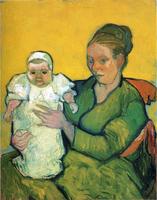
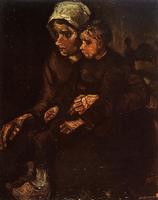
The half-figure composition—focusing on a woman and child in a domestic, intimate pose—reflects the Realist interest in the lives of ordinary, often marginalized, people. Van Gogh’s treatment here is direct and unadorned: the mother's expression and posture are not romanticized but resonate with a sense of grounded, human presence. The work’s significance lies in its raw, empathetic observation, which aligns with the social conscience of the Realist movement. This painting demonstrates van Gogh’s early mastery of subdued tones and humble subject matter, bridging the documentary impulse of Realism with the emotional weight that would later define his mature work. As a genre scene, it elevates a private, fleeting moment into a meditation on care, hardship, and connection—themes that remain central to his artistic legacy.