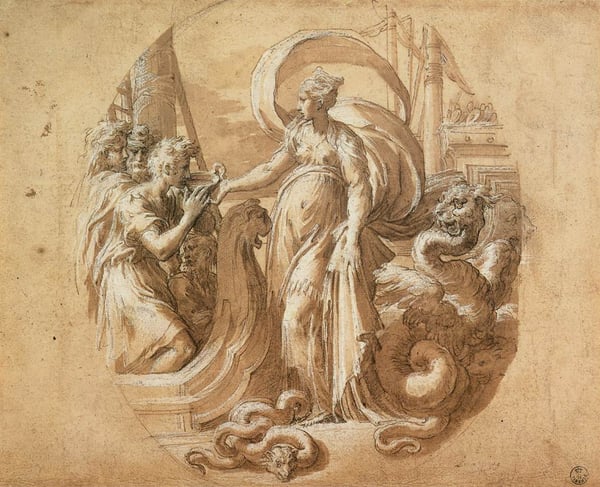
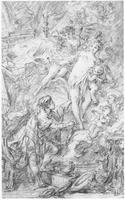
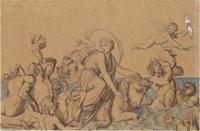
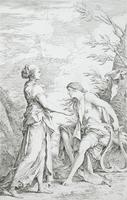
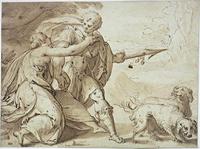
As an expert art historian, I provide the following analysis of Circe and the Companions of Ulysses by Parmigianino, based solely on the supplied facts.
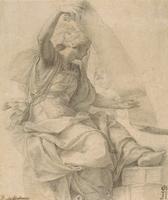
This work holds significance as a quintessential example of Mannerist draftsmanship and intellectual ambition. As a sketch and study, it captures the artist's spontaneous creative process, revealing his fascination with complex, serpentine compositions and the unnaturally elegant elongation of figures—hallmarks of the Mannerist style. The subject, drawn from Homer’s Odyssey, allows Parmigianino to explore a moment of magical transformation and psychological tension. Unlike a finished painting, this study foregrounds the artist's hand: the loose, searching lines and spatial ambiguities embody Mannerism’s deliberate departure from High Renaissance harmony and naturalism. Here, the sketch itself becomes a vehicle for virtuosity, prioritizing expressive distortion and intellectual complexity over mimetic accuracy. Its significance lies in how it captures the sophisticated, often mannered artifice of Late Renaissance art at the very moment of its conception.