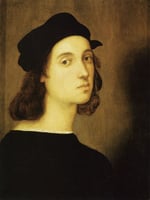
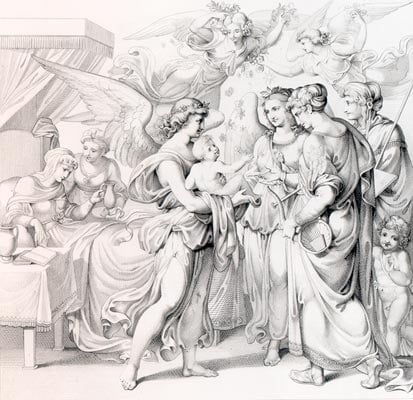
Expert analysis of Raphael’s Birth on Good Friday
Style: High Renaissance · Genre: sketch and study
Expert Analysis of "Birth on Good Friday" by Raphael
As a sketch and study executed in the High Renaissance style, Raphael’s Birth on Good Friday holds a unique position in the artist’s oeuvre and the broader artistic movement of the early 16th century. While the title suggests a paradoxical juxtaposition of a nativity scene with the solemnity of Good Friday—perhaps alluding to the redemptive cycle of Christ’s life—the work’s significance lies in its form as a preparatory drawing rather than a finished painting.
High Renaissance Ideals in a Preliminary Form
The High Renaissance is defined by a harmonious balance of composition, anatomical precision, and emotional restraint. Raphael’s sketches, including this one, are celebrated for capturing these ideals in their rawest state. Unlike fully realized altarpieces or frescoes, a study like Birth on Good Friday reveals the artist’s exploratory process: the searching lines, adjusted proportions, and dynamic groupings that embody the era’s commitment to disegno (the intellectual foundation of artistic creation). Here, even in an unfinished state, we witness Raphael’s masterful handling of human figures in space, likely experimenting with the placement of the Virgin, the Christ child, and attendant figures to evoke both the humility of birth and the foreshadowing of sacrifice.
Significance as a Sketch and Study
Within the genre of sketches and studies, Raphael’s drawings are invaluable for understanding the creative evolution of High Renaissance art. Birth on Good Friday would have served as a conceptual tool—a rapid notation of ideas intended for a larger composition, possibly a never-completed devotional painting. Such works are significant because they strip away color and polish, laying bare the artist’s intellect and technical skill. The phrase “on Good Friday” hints at a theological layer rare in preparatory sketches: the linking of nativity and crucifixion, a theme that resonates with the period’s focus on sacra conversazione and typological symbolism. Raphael’s ability to weave such complexity into a thumbnail study underscores his genius.
Legacy
In the context of Raphael’s career, this sketch exemplifies his relentless pursuit of perfection—a hallmark of the High Renaissance. It reminds us that the era’s greatest masterpieces were born from countless such experiments, where form, meaning, and emotion were distilled into fleeting lines on paper. Birth on Good Friday stands as a testament to the art of the study: not a mere preparatory step, but a finished work of intellectual and aesthetic value in its own right.
Visually similar
20 works with related composition and palette
The Holy Family Accompained by an Angel and two Saints
Bartolomeo Passerotti
Allegory of the five senses
Adam van Noort
The Lupercalian Festival in Rome. Cupid and Personifications of Fertility Encounter the Luperci Dressed as Dogs
Adam Elsheimer
Circe and the Companions of Ulysses
Parmigianino
Ecclesia Surrounded by Angels Holding the Instruments of the Passion
Bernardo Strozzi
Faith Hope and Love
Maarten de Vos
Naissance d'Adonis
Francesco de' Rossi (Francesco Salviati), "Cecchino"
Cult of Ceres
Jan Saenredam
Abraham and the Three Angels
Giorgio Vasari
Illustration to Odyssey
John Flaxman
Detail of the Dispute of the Sacrament of Raphael
Giovanni Battista Piranesi
Mercury Leading Geography
Giovanni Battista Gaulli
The chariot of the sun, from 'Aurora' of Guido Reni
Giovanni Battista Piranesi
Tobias and his blind father
Orest Kiprensky
Study of Two Women
Domenico Ghirlandaio
Visitation
Jacopo Pontormo
Danae
Joachim Wtewael
Studies on a great "picture of the Virgin" Madonna and Child, saints and angels playing
Albrecht Durer
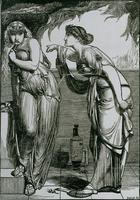
Helen and Cassandra
Frederick Sandys
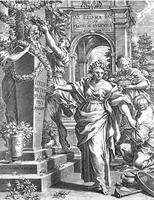
Title page from the Flora
Pietro da Cortona