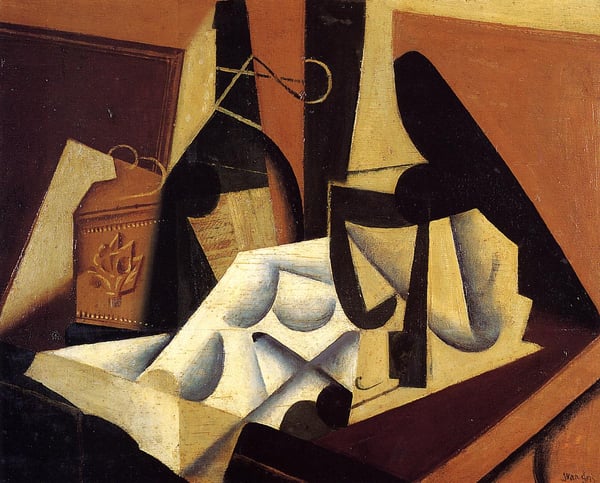
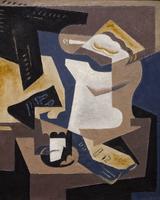
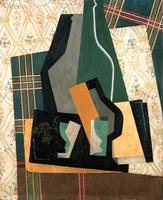
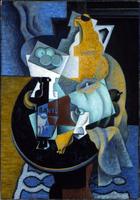
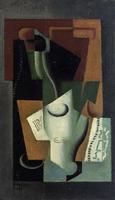
Analysis of "Still Life with White Tablecloth" by Juan Gris
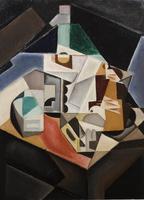
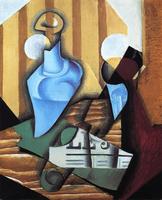
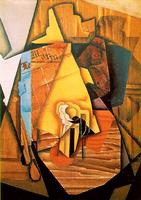
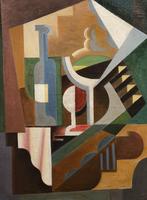
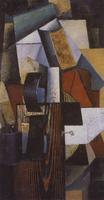
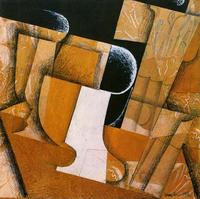
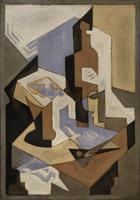
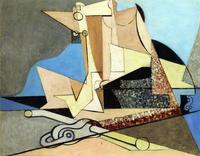
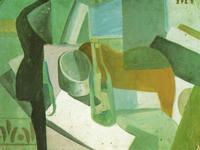
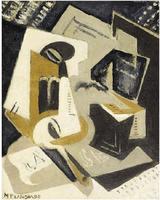
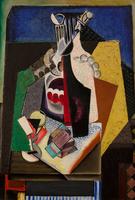
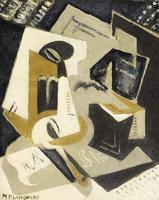
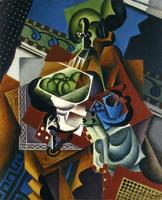
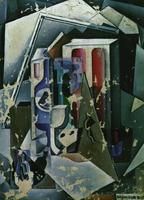
This work is a quintessential example of Synthetic Cubism, a movement that Juan Gris helped define through his rigorous, structured approach. Unlike the earlier Analytic Cubism, which fragmented objects into monochromatic facets, Synthetic Cubism—as seen here—reassembles everyday items into bold, simplified forms. The still life genre, traditionally focused on illusionistic representation, is transformed into a play of flat, overlapping planes and vivid contrasts. The "white tablecloth" likely provides a unifying geometric field against which disparate objects (implied by the style) are balanced, creating a visual harmony that feels both constructed and natural. Gris’s significance lies in his ability to inject clarity and color into Cubist vocabulary, turning abstraction into a serene, ordered vision. This painting demonstrates how Synthetic Cubism elevated the still life from mere depiction to a sophisticated arrangement of signs, where the subject is both recognized and reinvented through bold shape and subtle texture.