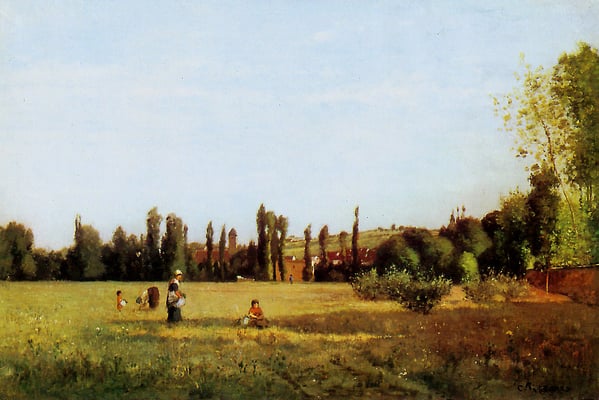
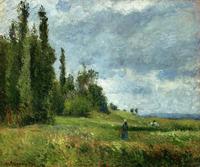
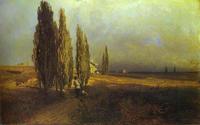
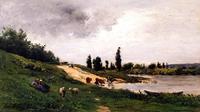
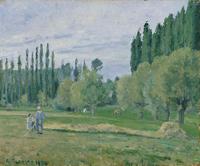
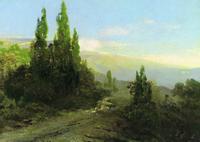
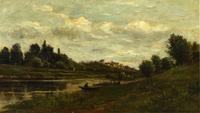
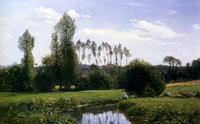
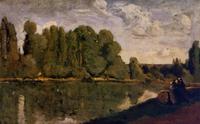
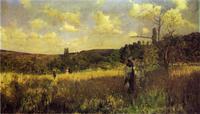
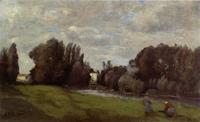
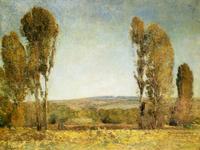
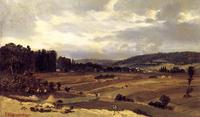
Camille Pissarro’s La Varenne de St. Hilaire exemplifies the Realist landscape tradition through its unembellished, almost documentary portrayal of the French countryside. As a work firmly rooted in Realism, Pissarro eschews idealization in favor of a direct, honest observation of nature—capturing the quiet rhythms of rural life along the Seine with a muted palette and careful attention to atmospheric effects. The painting’s significance lies in its transition from the studio to plein-air practice, anticipating the looser brushwork and heightened naturalism that would define Pissarro’s later Impressionist works. Here, the subdued earth tones, balanced composition, and focus on everyday peasant activity (likely figures tending fields or riverbanks) reflect Realism’s core mission: to portray the real world without artifice. Pissarro’s commitment to depicting the “common” landscape—neither dramatic nor picturesque—elevates the ordinary to a subject worthy of serious artistic study, cementing his role as a pivotal figure in the movement that challenged academic conventions.