Artwork Analysis: "Evening in the Crimea" by Fyodor Vasilyev
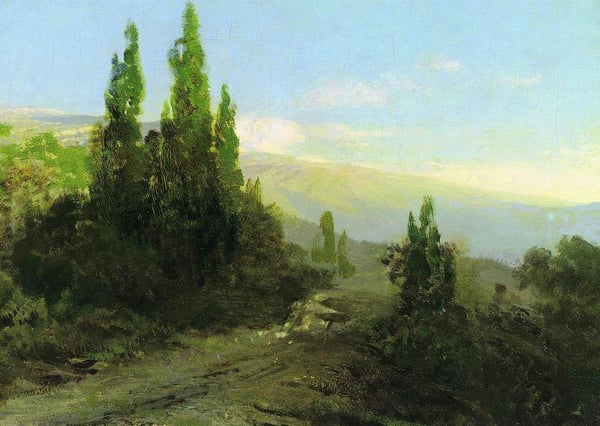
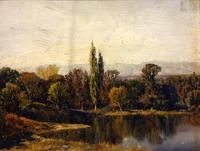
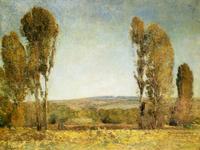
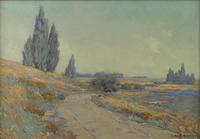
As a masterwork of 19th-century Russian Realism, Fyodor Vasilyev’s "Evening in the Crimea" exemplifies the movement’s commitment to truthful, unidealized depiction of nature while simultaneously elevating the landscape genre to a vehicle for poetic mood and emotional resonance. Painted late in the artist’s tragically brief career, the work captures the shifting light of dusk over the Crimean terrain—likely inspired by his travels to the region for his health. Vasilyev’s technique here demonstrates a profound sensitivity to atmosphere: soft, muted tones of lavender and ochre merge with crisp shadows, while the careful modulation of sky and earth creates a sense of tranquil transition from day to night.
What makes this painting significant within Realism is its balance of empirical observation and lyrical feeling. Unlike earlier academic landscapes that often idealized or dramatized scenery, Vasilyev records the specific qualities of Crimean light and topography with an almost documentary fidelity. Yet he infuses that realism with a contemplative, even melancholic, stillness—a hallmark of his mature style that influenced subsequent generations of Russian landscape painters. In "Evening in the Crimea," the ordinary terrain becomes a site of quiet grandeur, proving that Realism could transcend mere reportage to evoke profound subjective experience. This work stands as a testament to Vasilyev’s role in deepening the expressive possibilities of the landscape genre within the Realist tradition.