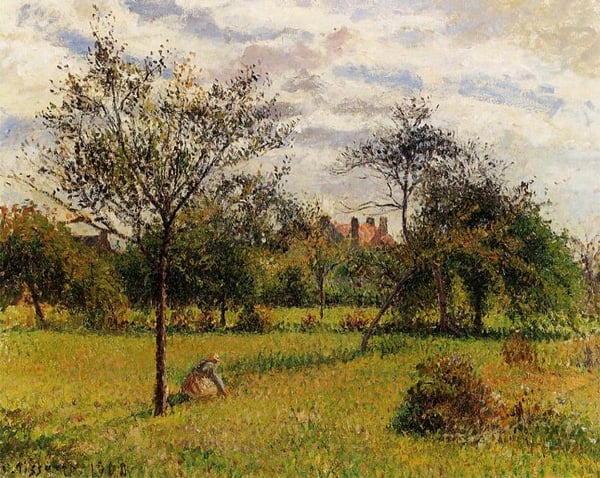
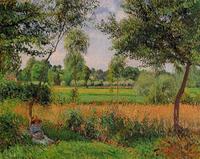
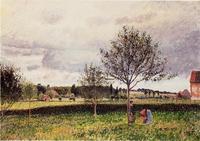
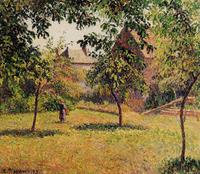
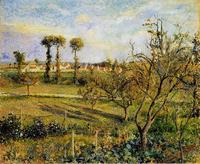
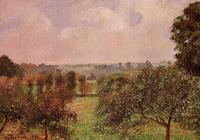
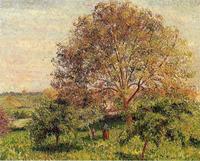
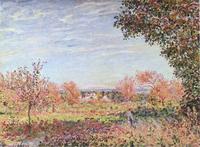
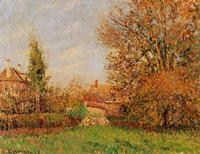
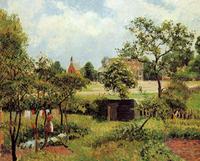
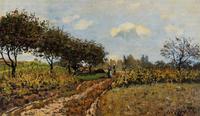
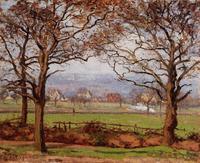
The significance of Camille Pissarro’s Morning, Autumn Sunlight, Eragny lies in its quintessential embodiment of Impressionist principles while also showcasing the artist’s mature, nuanced approach to plein-air landscape. As a leading figure of the movement, Pissarro here captures the transient effects of light and atmosphere—specifically the golden, low-angled autumn sun—using broken, rapid brushstrokes and a vibrant palette of warm yellows, oranges, and soft greens. The work’s genre as a landscape is elevated beyond mere topographical record: it becomes a study of how light modifies color and form at a specific moment (morning) and season (autumn). The setting of Eragny, where Pissarro settled late in his career, allowed him to explore familiar rural scenes with a reflective intimacy. The painting’s significance lies in its demonstration of how Impressionism could transform a simple, everyday view into a luminous sensory experience, emphasizing perceptual truth over narrative detail—a core achievement of the style.