This analysis is based solely on the provided structured facts.
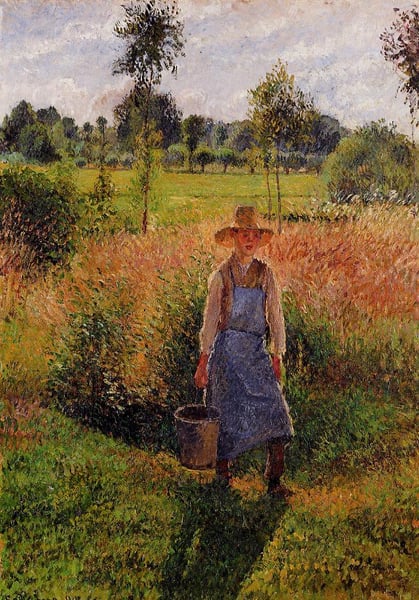
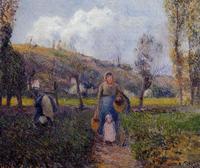
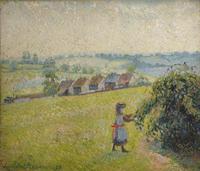
"The Gardener, Afternoon Sun, Eragny" by Camille Pissarro is a quintessential example of Impressionism applied to the genre painting tradition. Its significance lies in how it elevates a humble, everyday scene—a gardener at work in the late-day light—into a study of atmospheric color and transient sensation.
Within the Impressionist movement, Pissarro was a master of capturing the subtle effects of specific times of day. Here, the "afternoon sun" is not merely a backdrop but the true subject; the genre painting format allows him to record the shifting light as it falls across both the figure and the landscape of Eragny. Unlike earlier genre works that often carried moral or narrative weight, Pissarro's approach emphasizes direct visual perception over storytelling. The gardener becomes a vehicle for observing how sunlight models form, casts warm shadows, and dissolves boundaries between figure and ground—hallmarks of Impressionist technique.
By focusing on an anonymous laborer in an ordinary moment, Pissarro also aligns with the Impressionist interest in modern life and its unheroic realities. The work’s significance is thus twofold: it demonstrates the movement’s core principle of painting en plein air to record fleeting optical effects, and it validates the genre painting as a worthy vehicle for such advanced artistic inquiry, transforming the mundane into a radiant, sensory experience.